
Explore Trends, Innovations, and Achievements at HengZe Steel
How to Choose the Right Tinplate Coil for Your Product
- Industry News
- May 17, 2023
- 9:09 am
Selecting the right tinplate coil or tin-free steel (TFS) is critical for ensuring optimal corrosion resistance, solderability, lacquer adhesion, and formability in packaging and industrial applications. This comprehensive guide covers essential specifications including base steel grade, thickness, tolerance, temper, tin coating weight, and surface finish, as well as manufacturability considerations, joining methods, and quality control requirements. With practical selection scenarios for food cans, beverage containers, and industrial components, manufacturers can make informed decisions that balance performance, regulatory compliance, and cost-efficiency.
Hengze Steel provides precision-engineered tinplate and TFS coils, offering stable supply, technical support, and customizable specifications to meet demanding production needs.
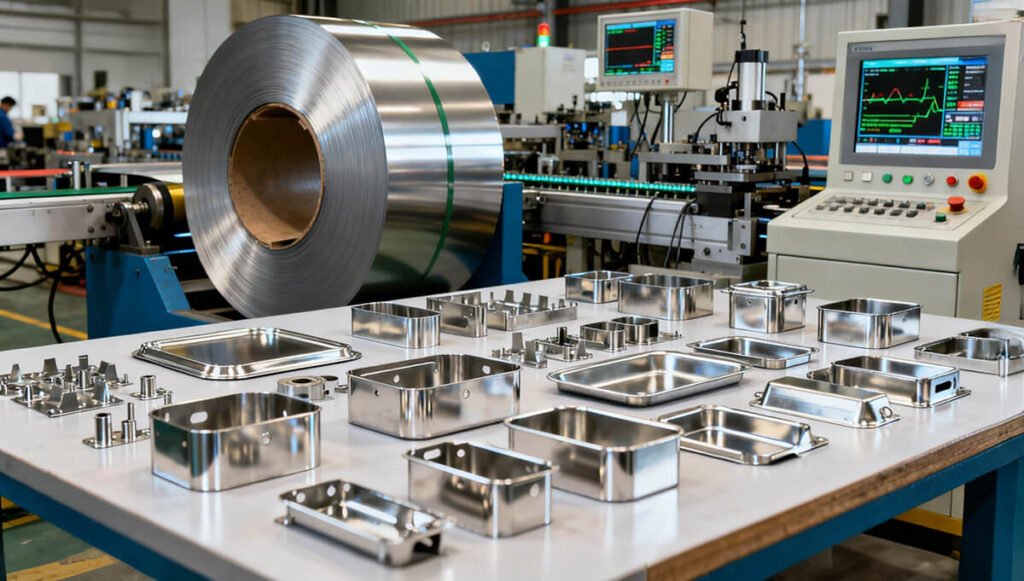
Table of Contents
-
1. Introduction — Why Tinplate Selection Matters1. Introduction — Why Tinplate Selection Matters
-
2. Quick Decision Checklist (One-Page)2. Quick Decision Checklist (One-Page)
-
3. Tinplate vs Tin-Free Steel (TFS) — Choose the Right Family3. Tinplate vs Tin-Free Steel (TFS) — Choose the Right Family
-
4. Key Specifications — What to Specify and Why4. Key Specifications — What to Specify and Why
-
5. Processing & Manufacturability Considerations5. Processing & Manufacturability Considerations
-
6. Corrosion Resistance, Food Safety & Coatings6. Corrosion Resistance, Food Safety & Coatings
-
7. Quality Control & Tests to Request from Suppliers7. Quality Control & Tests to Request from Suppliers
-
8. Sourcing, Lead Time & Cost Tradeoffs8. Sourcing, Lead Time & Cost Tradeoffs
-
9. Example Selection Scenarios9. Example Selection Scenarios
-
10. Final Checklist & Recommendations10. Final Checklist & Recommendations
-
11. FAQ11. FAQ
1. Introduction — Why Tinplate Selection Matters
Selecting the correct tinplate coil—or its chromium-based alternative, TFS—is a strategic engineering decision. It influences corrosion resistance, solderability/weldability, lacquer adhesion, deep-drawing performance, regulatory compliance, and long-term product reliability.
A mis-specified coil can result in coating failure, can-body deformation, accelerated corrosion, leaking seams or reduced shelf life. Therefore, material choice must align with both end-use environment (food grade, acidic content, decorative, industrial) and manufacturing process (drawing, welding, soldering, printing).
2. Quick Decision Checklist (One-Page)
Application type: food contact / beverage / aerosol / decorative / industrial.
Corrosion resistance: shelf life, acidity, environmental exposure.
Joining method: solder, seam-weld, resistance weld, mechanical lock, adhesive bonding.
Forming requirements: deep drawing, stamping, bending, roll forming.
Surface & appearance: bright, matte, stone, lacquered, lithographed.
Compliance: food-grade regulations, RoHS, EN/ASTM/JIS standards.
Cost vs performance: tin is premium; TFS is economical for lacquered/printed applications.
Share this checklist during RFQ to allow suppliers like Hengze Steel to match exact coil specifications.
3. Tinplate vs Tin-Free Steel (TFS) — Choose the Right Family
Tinplate (ETP — Electrolytic Tin Plate)
A cold-rolled steel substrate electro-coated with a micro-thin metallic tin layer.
Excellent corrosion resistance, solderability, and weldability.
Preferred for food cans, sanitary cans, closures, general cans, and applications requiring direct soldering.
Tin provides sacrificial protection, ideal for mildly acidic foods.
Tin-Free Steel (TFS / ECCS)
Chromium/chromium-oxide coating (no tin).
Superior paint / lacquer adhesion, ideal for printed packaging.
Not solderable; limited weldability.
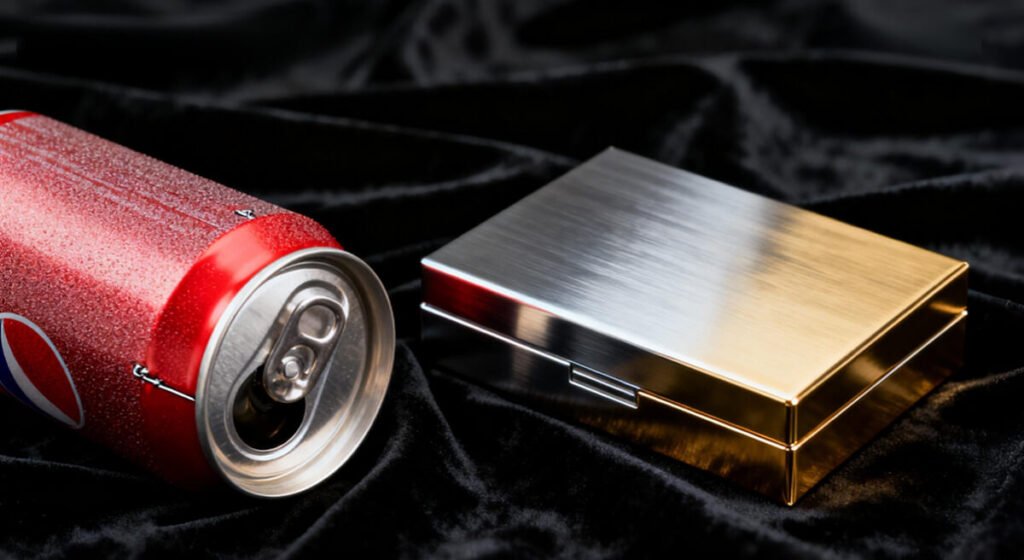
Cost-effective for lithographed cans, beverage ends, decorative components where lacquer is applied on both sides.
4. Key Specifications — What to Specify and Why
a) Base Steel Grade (Blackplate)
Common grades include SPCC, MR, L grades, depending on ductility and tensile strength requirements.
For deep drawing: choose low-carbon, high-ductility MR grades.
For stiff components: select higher-strength tempers or double-reduced (DR) grades.
Accurate base-steel stability ensures consistent forming and coating integrity.
b) Thickness (Gauge) and Tolerance
Typical coil thickness: 0.14–0.55 mm.
Thinner gauges improve formability but reduce rigidity.
Thicker gauges raise cost and may limit deep drawing.
Specify tolerance bands (e.g., ±0.01 mm) to ensure predictable tooling performance.
c) Temper / Hardness (T1–T5, DR8, DR9)
Temper controls mechanical behavior.
T1–T2: soft, for deep drawing.
T3–T5: higher strength, for panels, covers, ends.
DR grades: high strength with reduced thickness, ideal for cost-efficient lightweight packaging.
d) Tin Coating Weight (g/m²)
A key determinant of corrosion resistance and solderability.
Specify:
Weight per side (e.g., 2.8/2.8 g/m²)
Coating distribution
Electro-tinning method
Higher coating weight = stronger corrosion resistance and better solderability.
e) Surface Finish & Passivation
Bright (B): high gloss, suitable for printing.
Stone (R): uniform texture for consistent lacquer adhesion.
Matte (M): anti-glare, ideal for industrial applications.
Passivation (chromate or alternative eco-passivates) prevents white rust and improves lacquer compatibility.
5. Processing & Manufacturability Considerations
Forming & Deep Drawing
Tinplate’s ductility depends on temper and base steel.
Soft tempers minimize coating fracture during deep drawing.
DR tempers improve strength but reduce drawability.
Joining: Soldering, Welding, Adhesive Bonding
Soldering: tinplate is ideal; TFS is unsuitable.
Resistance welding: tinplate acceptable; TFS not recommended.
Adhesives / mechanical locks: suitable for both families.
Lacquering / Printing
TFS provides best lacquer anchorage for beverage cans.
Tinplate needs compatible lacquer chemistry but performs excellently when matched correctly.
Coil Handling & Decoiling
Specify:
ID/OD, coil weight, slit width tolerances
Packaging requirements (export seaworthy pallets, VCI paper)
6. Corrosion Resistance, Food Safety & Coatings
For food and beverage packaging, ensure that the tinplate:
Meets food-grade coating requirements
Includes proper lacquer for acidic/sulfur-rich foods
Has validated migration test documentation
Aligns with shelf-life expectations
Tin offers sacrificial protection—coating weight + lacquer selection must be engineered based on actual food chemistry.
Accelerated corrosion tests are useful, but real-product simulations offer the highest reliability.
7. Quality Control & Tests to Request from Suppliers
Request from mills or processors:
MTRs for base-steel chemistry and mechanical properties
Coating weight test data and uniformity analysis
Surface inspection reports (no pinholes, breaks, streaks, scratches)
Yield, tensile strength, elongation, temper verification
Lacquer adhesion tests, solderability wetting tests
Corrosion tests: white rust/black rust tests
Compliance with EN 10203 / ASTM / JIS G 3303
This ensures traceability and predictable production quality.
*Depending on climate and maintenance frequency.
8. Sourcing, Lead Time & Cost Tradeoffs
Tin price volatility significantly affects cost.
Higher tin coating = higher material cost
TFS offers a price advantage for lacquered applications
When sourcing:
Request MOQ, standard coil dimensions, slit availability
Clarify lead time for export shipments
Consider annual contracts or tin-price hedging for high-volume production
Hengze Steel provides stable supply programs for tinplate and TFS to help manufacturers reduce raw-material risk.
9. Example Selection Scenarios
Food can for acidic contents (e.g., tomato, fruit)
Tinplate ETP
Medium-to-high coating weight
Food-grade lacquer inside
Soft temper for deep drawing
Beverage ends / printed components
TFS (ECCS)
Superior lacquer adhesion
DR temper for strength
Cosmetic lids / decorative sheets
TFS with matte or stone finish
Requires no soldering
10. Final Checklist & Recommendations
Before issuing an RFQ, define:
End-use conditions and corrosion environment
Required international standards
Thickness + tolerance + temper
Tin coating weight, per-side specification
Surface finish, passivation, oiling
Processing steps (drawing, soldering, welding, lacquer curing)
QC requirements and acceptance criteria
Packing, pallet type, coil weight limit
Communicating this to multiple suppliers ensures competitive and technically aligned quotations.

11. FAQ
When paint adhesion and cost efficiency matter more than solderability or welding.
Critical. It directly influences corrosion resistance and solderability.
EN 10203, ASTM relevant tinplate standards, or JIS G 3303 depending on your region.
For engineered tinplate and TFS coil solutions with strict dimensional accuracy and stable coating control, Hengze Steel offers mill-direct supply, technical support, and customizable specifications.
Steel Coil related articles
Trending News
What to Expect When You Contact Us
Fast Response – Replies within 12 hours
Tailored Solutions – Based on your needs and industry
Full Support – From products to technical and market guidance