
Explore Trends, Innovations, and Achievements at HengZe Steel
Galvanized Coating Designations Guide | ASTM G90, EN Z275, JIS Z27
- Industry News
- February 26, 2026
- 2:33 am
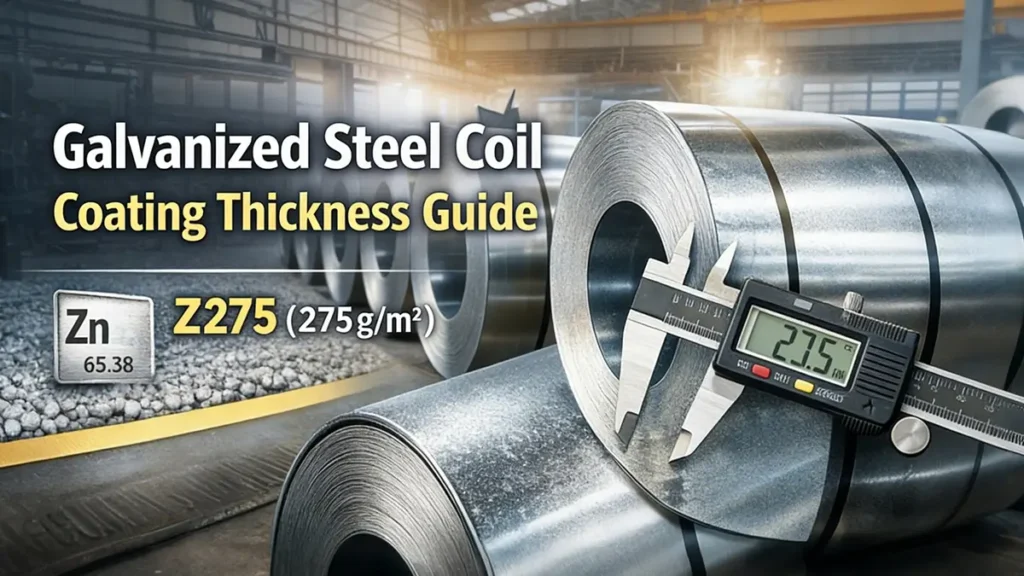
Selecting the correct zinc coating thickness for galvanized steel coils is critical to ensuring long-term corrosion resistance, structural durability, and cost efficiency. Manufacturers such as Hengze Steel provide a wide range of coating options from Z60 to Z350+, allowing engineers and procurement managers to match coating performance precisely with project requirements.
This guide provides a technical, standards-based approach to choosing the optimal galvanized steel coil coating thickness for different environmental and application conditions.
Table of Contents
-
1️⃣ Why Coating Thickness Determines Service Life1️⃣ Why Coating Thickness Determines Service Life
-
2️⃣ Zinc Coating Weight vs Thickness: Standards Explained2️⃣ Zinc Coating Weight vs Thickness: Standards Explained
-
3️⃣ Coating Classifications and Corrosion Performance3️⃣ Coating Classifications and Corrosion Performance
-
4️⃣ Environmental Exposure and Coating Selection4️⃣ Environmental Exposure and Coating Selection
-
5️⃣ Application-Based Recommendations5️⃣ Application-Based Recommendations
-
6️⃣ Z180 vs Z275: A Practical Corrosion Comparison6️⃣ Z180 vs Z275: A Practical Corrosion Comparison
-
7️⃣ Lifecycle Cost vs Initial Material Cost7️⃣ Lifecycle Cost vs Initial Material Cost
-
8️⃣ Common Specification Mistakes8️⃣ Common Specification Mistakes
-
9️⃣ Inspection and Quality Control9️⃣ Inspection and Quality Control
-
🔟 Final Engineering Recommendations🔟 Final Engineering Recommendations
1️⃣ Why Coating Thickness Determines Service Life
The relationship is straightforward:
Greater zinc coating weight = Longer corrosion protection period.
For those researching galvanized steel coil durability in industrial areas or how long Z275 galvanized steel lasts outdoors, coating thickness is the primary performance determinant.
Corrosion rate depends on:
-
Humidity
-
Chloride exposure (coastal areas)
-
Sulfur dioxide levels (industrial zones)
-
Temperature fluctuation
A properly selected zinc coating can extend service life from 10 years to over 30 years depending on environment.
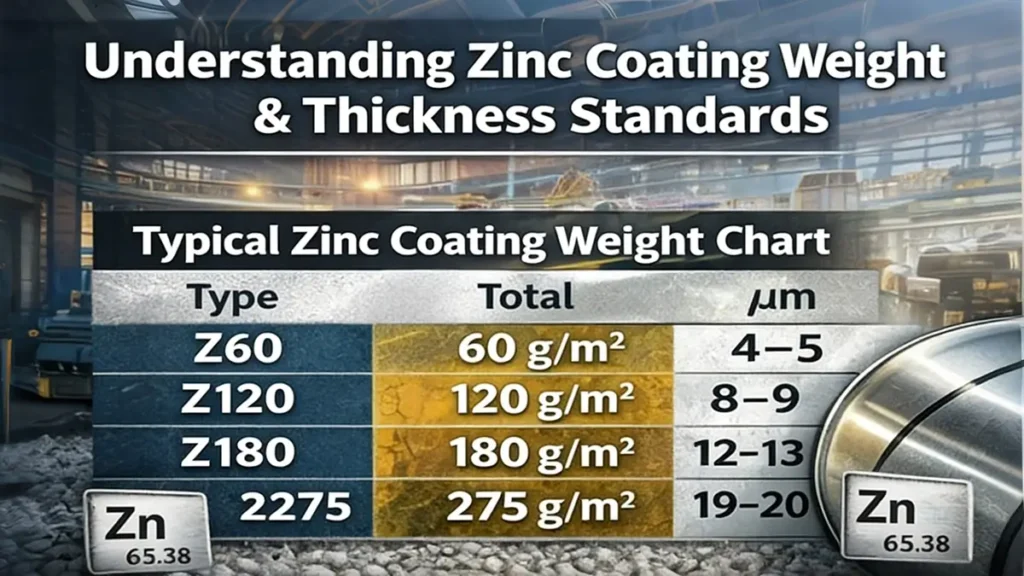
2️⃣ Zinc Coating Weight vs Thickness: Standards Explained
Typical Zinc Coating Weight Chart
3️⃣ Coating Classifications and Corrosion Performance
Based on ISO atmospheric corrosion categories:
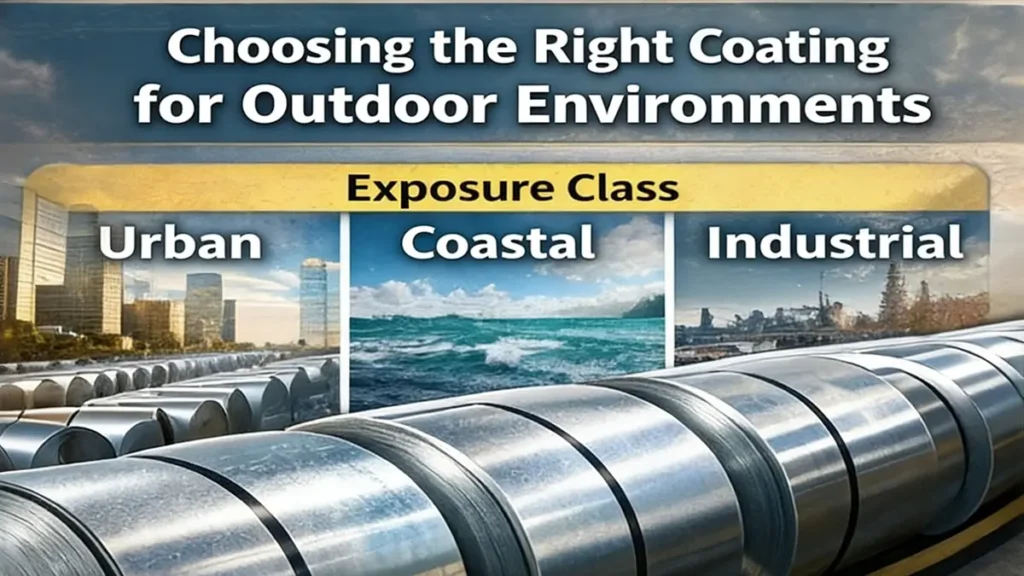
C1–C2 (Low exposure) → Z60–Z100 sufficient
C3 (Urban / moderate industrial) → Z120–Z180 recommended
C4–C5 (Coastal / high industrial) → Z275 or higher
For galvanized steel used in coastal environments, chloride ions accelerate zinc consumption. In these cases, heavier coatings dramatically increase time-to-red-rust formation.
Professionals searching for a zinc coating weight chart g/m² for outdoor construction should align coating weight with corrosion class rather than selecting a default specification.
4️⃣ Environmental Exposure and Coating Selection
Choosing the correct galvanized coating thickness for outdoor use requires assessing real exposure conditions.
Indoor Dry Applications
HVAC systems, appliance panels, and structural components inside buildings typically require only Z60–Z100.
Urban Construction
Roof panels, wall cladding, and framing in moderate climates typically use Z120–Z180.
Coastal & Marine Structures
Salt spray exposure demands Z275 or even Z350 for long-term durability.
Heavy Industrial Facilities
Chemical plants or factories emitting acidic gases may require heavy zinc coatings or duplex systems (galvanized + paint).
At this stage of project evaluation, suppliers such as Hengze Steel often provide technical data sheets and coating certification reports to support engineering decisions while maintaining compliance with ASTM and EN standards.
5️⃣ Application-Based Recommendations
Roofing Panels
For those evaluating the best zinc coating for roofing panels, Z120–Z180 works in temperate zones, while Z275 is safer for high humidity or coastal roofing.
Structural Frames
Load-bearing galvanized steel structures benefit from Z180–Z275 to prevent long-term corrosion weakening.
Automotive Panels
Automotive galvanized coils often balance coating thickness with formability. Controlled zinc layers ensure adequate corrosion protection without compromising stamping performance.
Agricultural Buildings
High ammonia concentration and humidity demand heavier coatings to ensure long service life.
6️⃣ Z180 vs Z275: A Practical Corrosion Comparison
One of the most common procurement questions is:
Is Z275 worth the additional cost over Z180?
Technical comparison:
-
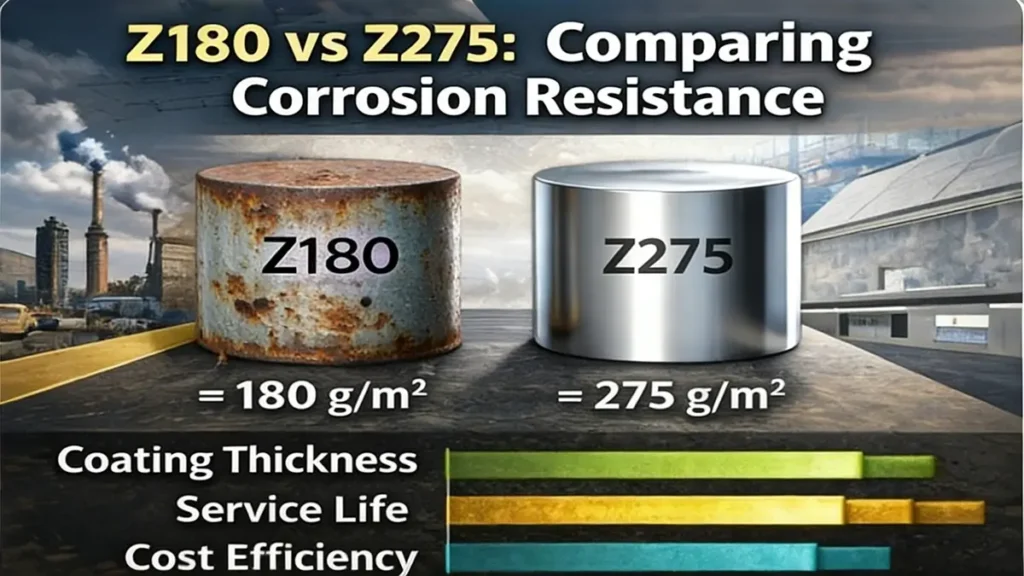
Z275 contains ~50% more zinc mass than Z180.
-
Salt spray testing shows significantly delayed red rust onset.
-
Service life extension can exceed 5–10 additional years in harsh climates.
While Z275 increases upfront material cost slightly, it reduces maintenance, repainting, and premature replacement expenses.
7️⃣ Lifecycle Cost vs Initial Material Cost
A frequent mistake in galvanized steel procurement is focusing solely on price per ton.
A thin coating may reduce purchase cost but increase:
Maintenance frequency
Structural repair cost
Replacement intervals
Downtime in industrial facilities
Engineers evaluating galvanized steel coil lifecycle cost analysis should calculate long-term performance rather than initial savings.
8️⃣ Common Specification Mistakes
Underestimating marine exposure
Ignoring ASTM A653 coating requirements
Selecting coating without considering fabrication stress
Failing to account for cut-edge corrosion
These errors often lead to premature corrosion failure.
9️⃣ Inspection and Quality Control
Professional galvanized steel suppliers implement strict testing procedures:
Magnetic thickness gauge testing
XRF coating weight verification
Salt spray corrosion testing
Bend and adhesion testing
Reliable manufacturers, including Hengze Steel, provide mill test certificates confirming coating compliance and traceability.
🔟 Final Engineering Recommendations
Choosing the right coating thickness for galvanized steel coils requires:
Identifying environmental corrosion category
Matching coating weight to exposure severity
Evaluating lifecycle cost
Verifying compliance with ASTM, EN, or JIS standards
Ensuring supplier quality assurance
For indoor applications, lighter coatings may suffice. For coastal, industrial, or heavy outdoor construction, Z275 or higher coatings provide superior durability and long-term economic value.
By following a structured galvanized steel coil coating thickness guide, engineers and procurement specialists can confidently select materials that deliver optimal corrosion protection, structural integrity, and return on investment.
Trending News
What to Expect When You Contact Us
Fast Response – Replies within 12 hours
Tailored Solutions – Based on your needs and industry
Full Support – From products to technical and market guidance