
Explore Trends, Innovations, and Achievements at HengZe Steel
How Coating Technologies Improve PPGI Steel Coil Performance
- Industry News
- June 21, 2022
- 6:35 am
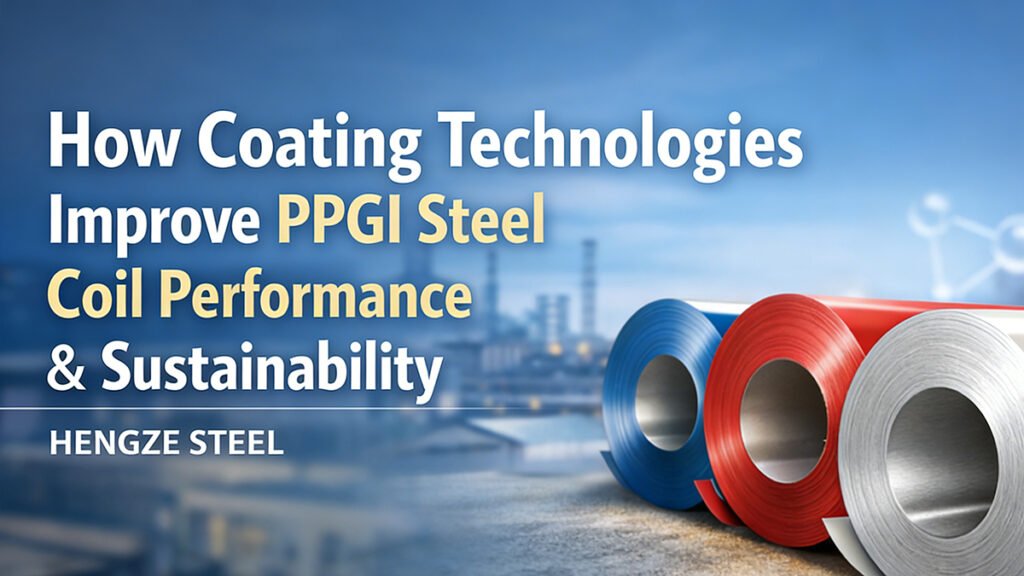
In modern construction, manufacturing, and infrastructure projects, PPGI steel coils are increasingly recognized for their balanced combination of corrosion resistance, durability, and surface aesthetics. This growing adoption is closely linked to continuous advancements in coating technologies, which play a critical role in extending service life and improving environmental performance.
Across the global steel supply chain, manufacturers such as Hengze Steel, along with other industry participants, continue to emphasize coating performance as a key factor in meeting evolving market requirements. Understanding how these coating systems work is essential for buyers and engineers seeking reliable, long-term material solutions.
Table of Contents
-
1️⃣ Understanding PPGI Steel Coils and Their Coating Systems1️⃣ Understanding PPGI Steel Coils and Their Coating Systems
-
2️⃣ Major Coating Technologies Used in PPGI Steel Coils2️⃣ Major Coating Technologies Used in PPGI Steel Coils
-
3️⃣ How Advanced Coatings Improve PPGI Steel Coil Performance3️⃣ How Advanced Coatings Improve PPGI Steel Coil Performance
-
4️⃣ Sustainability Advantages of Modern PPGI Coating Technologies4️⃣ Sustainability Advantages of Modern PPGI Coating Technologies
-
5️⃣ Key Application Scenarios Where Coating Performance Matters5️⃣ Key Application Scenarios Where Coating Performance Matters
-
6️⃣ Practical Guidelines for Selecting the Right PPGI Coating6️⃣ Practical Guidelines for Selecting the Right PPGI Coating
-
7️⃣ Conclusion7️⃣ Conclusion
-
8️⃣ FAQ8️⃣ FAQ
1️⃣ Understanding PPGI Steel Coils and Their Coating Systems
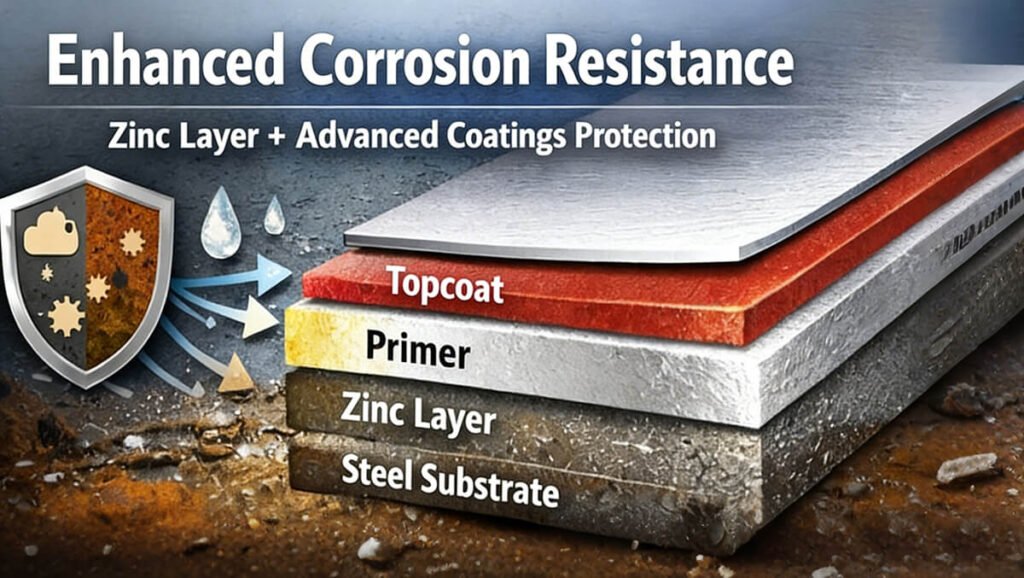
PPGI (Pre-Painted Galvanized Steel) coils are produced by applying organic coatings to galvanized steel substrates through continuous, factory-controlled processes. A typical coating system includes:
Zinc-coated steel substrate
Chemical pretreatment layer
Primer coating
Functional and decorative topcoat
This multi-layer structure provides enhanced corrosion protection, coating adhesion, and color stability, outperforming conventional post-painted or uncoated steel products.
Because the coating process is completed before fabrication, PPGI steel coils achieve consistent quality, uniform thickness, and predictable performance, which are critical in large-scale construction and industrial applications.
2️⃣ Major Coating Technologies Used in PPGI Steel Coils
Polyester (PE) Coatings
Polyester coatings are widely used for general-purpose PPGI steel coils due to their cost efficiency and balanced performance. They provide:
Good adhesion and flexibility
Acceptable weather resistance for standard environments
Stable appearance for roofing sheets and wall panels
PE coatings are typically selected when economic efficiency and moderate durability are sufficient.
Silicone Modified Polyester (SMP)
SMP coatings incorporate silicone components into polyester systems, offering:
Improved resistance to UV radiation and heat
Reduced chalking and fading
Better performance in outdoor architectural applications
These coatings are suitable for industrial buildings and exterior cladding systems exposed to stronger sunlight.
High Durability Polyester (HDP)
HDP coatings are engineered for enhanced weather resistance and extended service life. Compared with standard polyester, HDP provides:
Improved UV stability
Slower color degradation
Better long-term surface performance
HDP-coated PPGI steel coils are commonly used in projects with higher durability expectations.
Polyvinylidene Fluoride (PVDF) Coatings
PVDF coatings represent the premium segment of PPGI coating technologies. Key advantages include:
Exceptional corrosion resistance
Superior color retention and gloss stability
Excellent resistance to chemicals, salt spray, and UV exposure
PVDF-coated PPGI steel coils are often specified for high-end architectural facades, coastal environments, and landmark projects.
3️⃣ How Advanced Coatings Improve PPGI Steel Coil Performance
Enhanced Corrosion Resistance
The combined protection of zinc galvanization and organic coatings creates a dual-defense system. Zinc provides sacrificial protection, while the coating forms a barrier against moisture and airborne contaminants.
In practical applications, steel suppliers and processors — including companies like Hengze Steel — often evaluate coating systems based on expected exposure conditions to ensure long-term corrosion resistance and reduced maintenance requirements.
Weather and UV Resistance
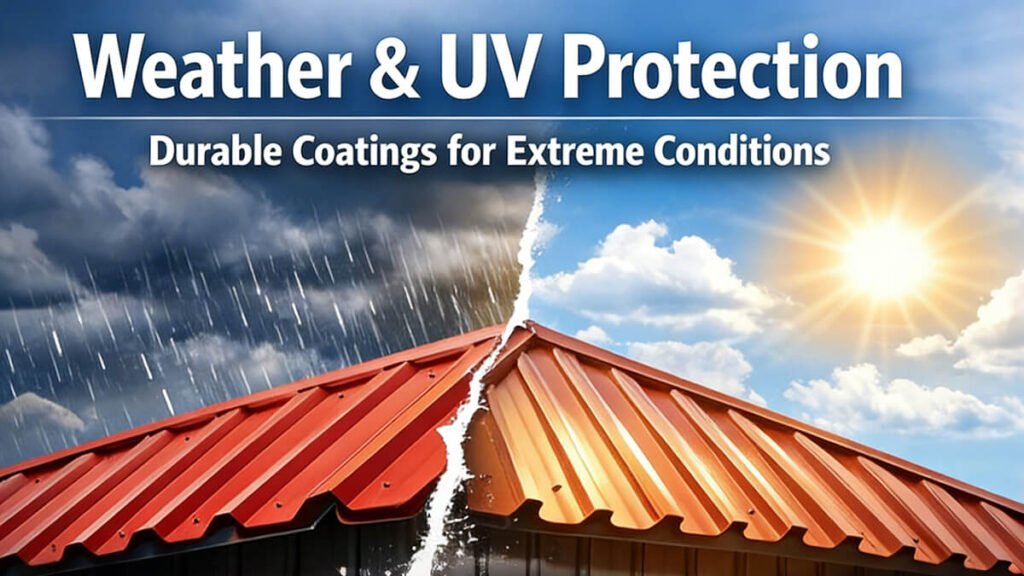
Advanced coatings such as HDP and PVDF are designed to withstand prolonged exposure to sunlight, temperature changes, and humidity. These systems minimize:
-
Chalking
-
Fading
-
Surface degradation
Color Stability and Aesthetic Performance
High-quality pigments and controlled curing processes enable modern coatings to deliver excellent color uniformity and gloss retention. This is particularly important in architectural applications where visual appearance directly affects project value.
Mechanical Durability and Fabrication Performance
Well-formulated coatings maintain adhesion and flexibility during cutting, bending, and forming. This improves fabrication efficiency and reduces the risk of surface damage during downstream processing.
4️⃣ Sustainability Advantages of Modern PPGI Coating Technologies
Extended Service Life and Resource Efficiency
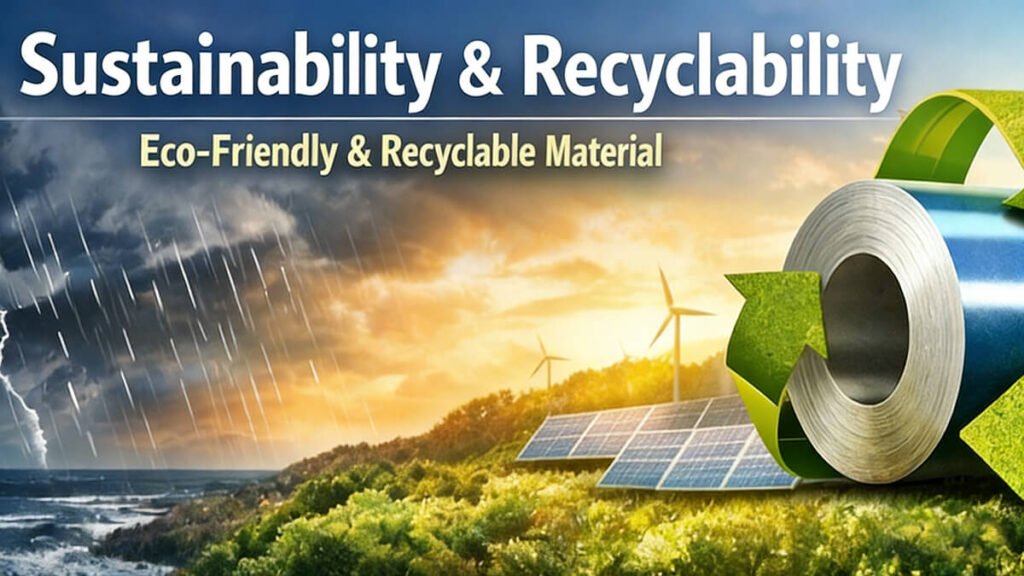
Longer service life is a key sustainability advantage of coated PPGI steel. Durable coatings reduce the need for frequent replacement, lowering material consumption and overall environmental impact.
Low-VOC and Environmentally Responsible Coatings
Modern coating technologies increasingly rely on low-VOC or water-based systems, reducing emissions during manufacturing and supporting environmental compliance across global markets.
Recyclability and Circular Economy Compatibility
Steel remains one of the most recyclable construction materials. PPGI steel coils can be recovered and reused at the end of their lifecycle, supporting circular economy principles.
5️⃣ Key Application Scenarios Where Coating Performance Matters
Advanced coating technologies enable PPGI steel coils to perform reliably in:
Construction: roofing systems, wall cladding, prefabricated buildings
Home appliances: durable and clean exterior panels
Industrial facilities: corrosion-resistant structural components
HVAC and equipment enclosures: long-term protective housings
In each scenario, coating selection directly influences service life, maintenance frequency, and lifecycle cost.
6️⃣ Practical Guidelines for Selecting the Right PPGI Coating
When selecting PPGI steel coils, consider:
Environmental exposure (coastal, industrial, or inland)
Required service life and maintenance expectations
Aesthetic requirements such as color stability
Sustainability goals and regulatory standards
Aligning coating technology with application conditions ensures optimal long-term performance.
7️⃣ Conclusion
Coating technologies are central to the performance and sustainability of PPGI steel coils. By enhancing corrosion resistance, weather durability, and recyclability, modern coatings transform galvanized steel into a versatile, long-lasting material.
As global suppliers such as Hengze Steel and others continue to refine coating systems, PPGI steel coils are expected to play an increasingly important role in sustainable construction and industrial manufacturing worldwide.
8️⃣ FAQ
Q1: Why are coatings essential for PPGI steel coils?
They enhance corrosion resistance, durability, and long-term appearance beyond basic galvanization.
Q2: Which coating is best for harsh outdoor environments?
HDP and PVDF coatings are typically preferred for demanding conditions.
Q3: Are PPGI steel coils environmentally friendly?
Yes. Long service life, low-VOC coatings, and recyclability contribute to sustainability.
Q4: Do coatings affect fabrication performance?
High-quality coatings are designed to withstand forming and bending without surface damage.
Q5: How do coatings reduce lifecycle costs?
Durable coatings lower maintenance, repainting, and replacement frequency over time.
Trending News
What to Expect When You Contact Us
Fast Response – Replies within 12 hours
Tailored Solutions – Based on your needs and industry
Full Support – From products to technical and market guidance