
Tinplate Coil (ETP / SPTE) – Technical Guides & Insights
Explore tinplate coil specifications, tin coating weights, steel grades, surface finishes, manufacturing processes, and metal packaging applications.
-
Manufacturing
Expertise -
Reliable Quality
-
Global Support
Tinplate Coil (ETP / SPTE) Guide

Steel Coil Categories
-
Galvanized Steel Coil (GI)Galvanized Steel Coil (GI)
-
Galvalume Steel Coil (GL)Galvalume Steel Coil (GL)
-
PPGI Steel CoilPPGI Steel Coil
-
PPGL Steel CoilPPGL Steel Coil
-
Prepainted Aluminum CoilPrepainted Aluminum Coil
-
Zn-Al-Mg Coated Steel CoilZn-Al-Mg Coated Steel Coil
-
Tinplate Coil (ETP / SPTE)Tinplate Coil (ETP / SPTE)
-
Corrugated Steel Roofing SheetsCorrugated Steel Roofing Sheets
What will you get when touch?
Popular Steel Guides




Need Technical Support?
Our steel experts are ready to help you select the right steel grade, specifications, and products for your application.
Frequently Asked Questions
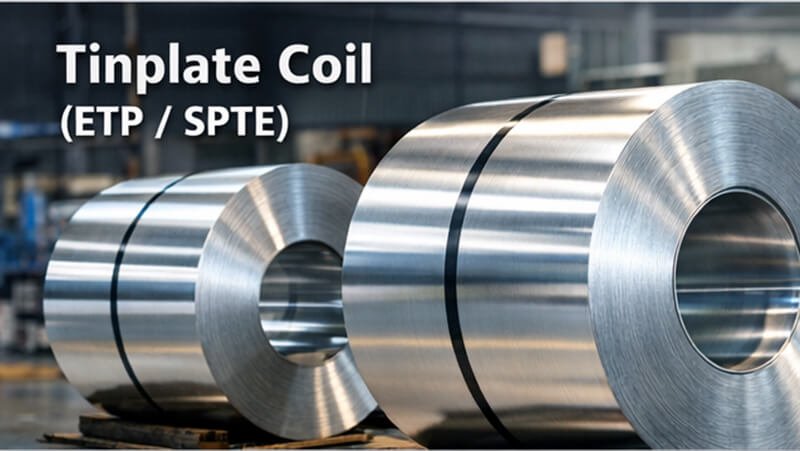
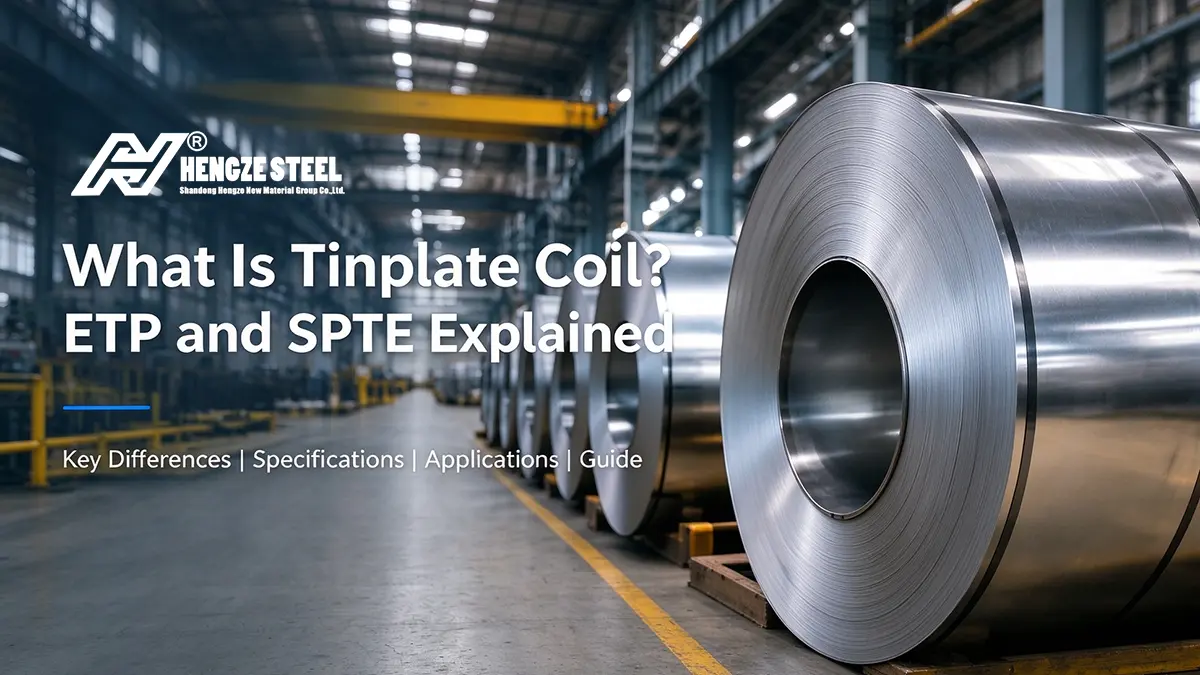
Tinplate coil, also known as electrolytic tinplate (ETP), is cold-rolled steel strip coated with a thin layer of tin through an electrolytic plating process. It combines the strength and formability of steel with the corrosion resistance, solderability, and surface properties of tin.
SPTE stands for electrolytic tinplate, a designation commonly used in Japanese industrial standards and international trade. It refers to cold-rolled steel sheet or strip coated with tin through an electrolytic process.
ETP has an electrolytically deposited tin coating, while TFS (Tin-Free Steel), also known as electrolytic chromium-coated steel, uses a chromium-based surface coating system. Both are used in metal packaging, but their corrosion protection, welding, soldering, and coating requirements differ.
Tinplate is available in different coating weights, depending on the intended application. Common designations include 2.8/2.8, 5.6/5.6, and 11.2/11.2 g/m², representing the nominal tin coating mass on each side. Differential coating weights are also available.
Single reduced (SR) tinplate is produced through one main cold-reduction stage and generally offers good formability. Double reduced (DR) tinplate undergoes additional cold reduction, resulting in higher strength and thinner gauges, making it suitable for lightweight packaging applications.