
Explore Trends, Innovations, and Achievements at HengZe Steel
Steel Coil Supplier vs Manufacturer: What's the Difference?
- Industry News
- October 27, 2026
- 3:21 am
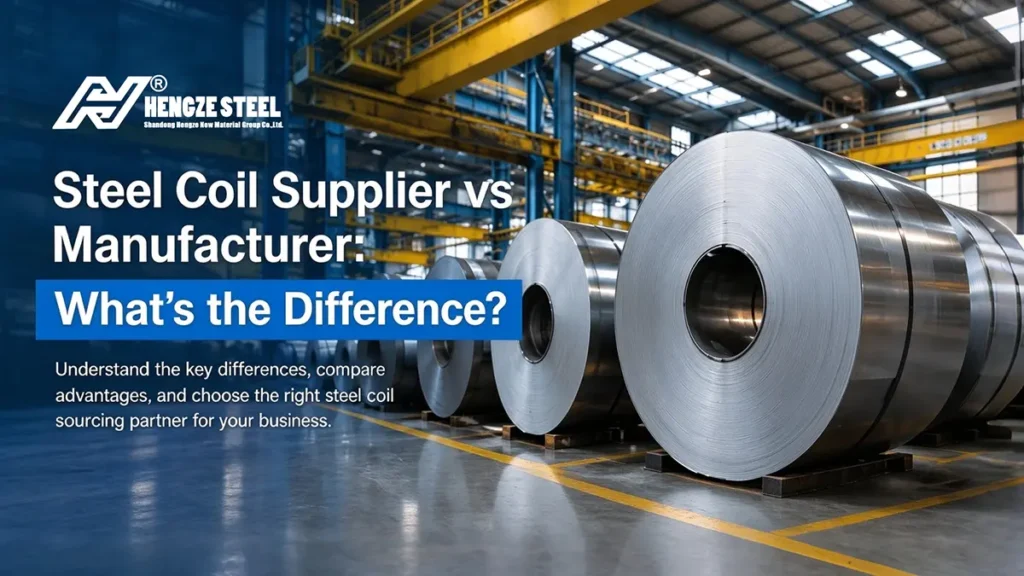
Understanding the difference between a steel coil supplier and a steel coil manufacturer is essential for making informed purchasing decisions. Although the two terms are sometimes used interchangeably, they describe different roles in the steel supply chain. A manufacturer produces steel coil through manufacturing operations, while a supplier sources, stocks, processes, or distributes steel coil to meet customer requirements. Some companies perform both functions.
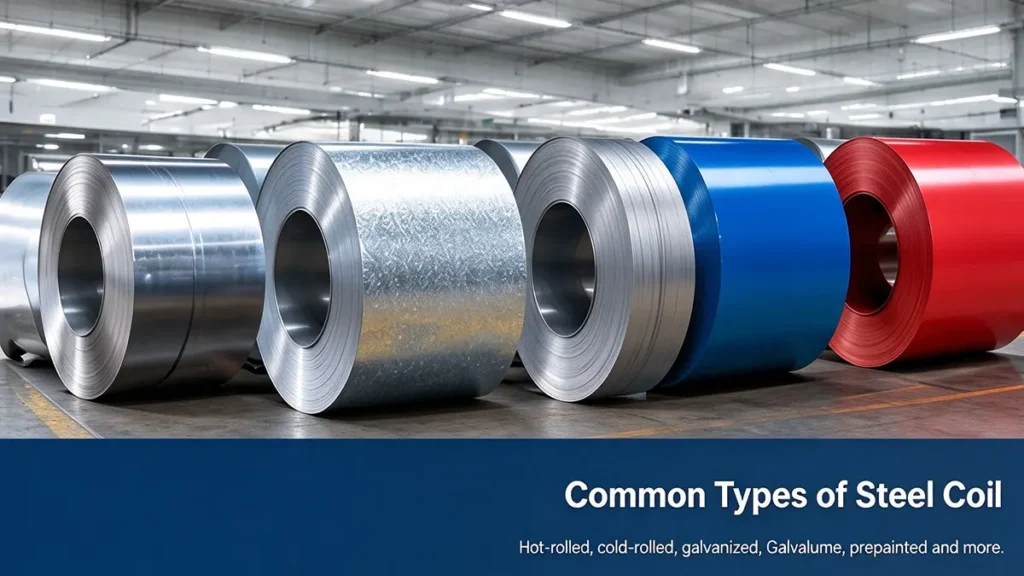
For buyers of hot-rolled steel coil, cold-rolled steel coil, galvanized steel coil, Galvalume steel coil, and prepainted steel coil (PPGI/PPGL), choosing the right sourcing partner can affect material consistency, minimum order quantities (MOQs), delivery schedules, quality documentation, and total procurement costs.
The best choice depends on more than the quoted price per metric ton. Buyers must also consider the actual production source, technical specifications, inventory availability, processing capabilities, and the supplier’s ability to meet delivery and documentation requirements.
As an established name in the steel products sector, Hengze Steel provides a relevant point of reference for buyers evaluating steel coil sourcing options. Understanding how manufacturers, distributors, and steel service centers operate helps procurement teams assess potential partners objectively and select an arrangement suited to their production needs.
This guide explains the key differences between steel coil suppliers and manufacturers, compares their commercial and technical advantages, and provides a practical framework for evaluating steel coil sourcing partners.
Table of Contents
-
1️⃣ What Is a Steel Coil Manufacturer?1️⃣ What Is a Steel Coil Manufacturer?
-
2️⃣ What Is a Steel Coil Supplier?2️⃣ What Is a Steel Coil Supplier?
-
3️⃣ Steel Coil Supplier vs Manufacturer: Key Differences3️⃣ Steel Coil Supplier vs Manufacturer: Key Differences
-
4️⃣ Which Option Is Better for Your Business?4️⃣ Which Option Is Better for Your Business?
-
5️⃣ How to Evaluate a Steel Coil Supplier or Manufacturer5️⃣ How to Evaluate a Steel Coil Supplier or Manufacturer
-
6️⃣ Common Steel Coil Purchasing Mistakes6️⃣ Common Steel Coil Purchasing Mistakes
-
Frequently Asked QuestionsFrequently Asked Questions
-
ConclusionConclusion
1️⃣ What Is a Steel Coil Manufacturer?
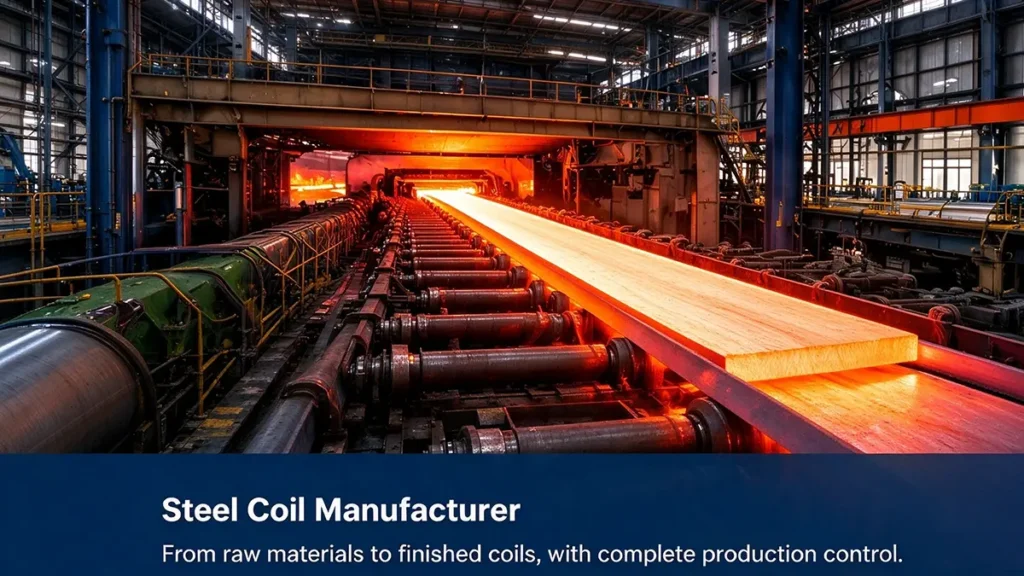
A steel coil manufacturer is a company that produces steel coil through one or more industrial manufacturing processes. Depending on its production capabilities, the facility may specialize in steelmaking, hot rolling, cold rolling, annealing, metallic coating, color coating, or downstream finishing.
Not every manufacturer operates every stage of the production chain. For example, a galvanizing or color-coating plant may purchase hot-rolled or cold-rolled substrate from another steel mill before applying its own coating. Consequently, buyers should distinguish between a company that manufactures a finished steel coil and one that produces the underlying steel substrate.
How steel coil is manufactured
The production route depends on the steel grade and finished product. A typical flat-steel manufacturing process includes the following stages.
-
 Step 1: Steelmaking and casting Steel is produced through a suitable steelmaking route, such as the basic oxygen furnace (BOF) or electric arc furnace (EAF) process. The molten steel is refined to the required chemical composition and cast into semi-finished products, commonly slabs for flat-steel production.
-
 Step 2: Hot rolling Steel slabs are reheated and passed through rolling stands to reduce their thickness. The resulting strip is cooled and coiled into hot-rolled coil (HRC), which is used in structural fabrication, pipe production, machinery, and further steel processing.
-
Step 3: Cold rolling and annealing When tighter dimensional control, a smoother surface, or specific mechanical properties are required, hot-rolled substrate may be pickled, cold-rolled, and annealed. The precise sequence depends on the intended application and product specification.
-
Step 4: Coating and finishing Depending on the product, the steel strip may receive a zinc coating, an aluminum-zinc-based alloy coating, or a paint system. Inspection, recoiling, identification, and protective packaging prepare the finished coil for shipment.
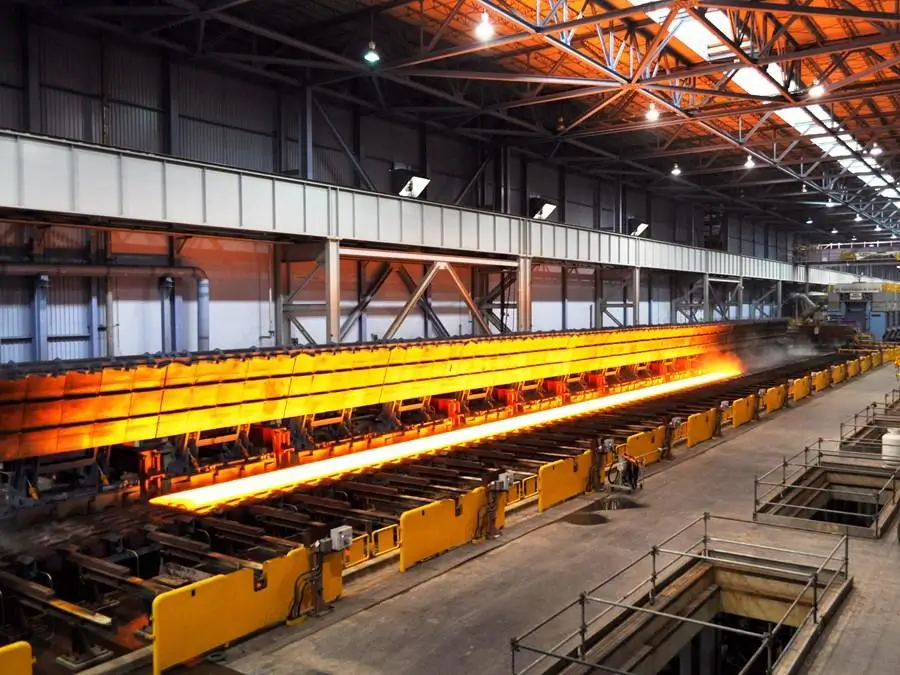
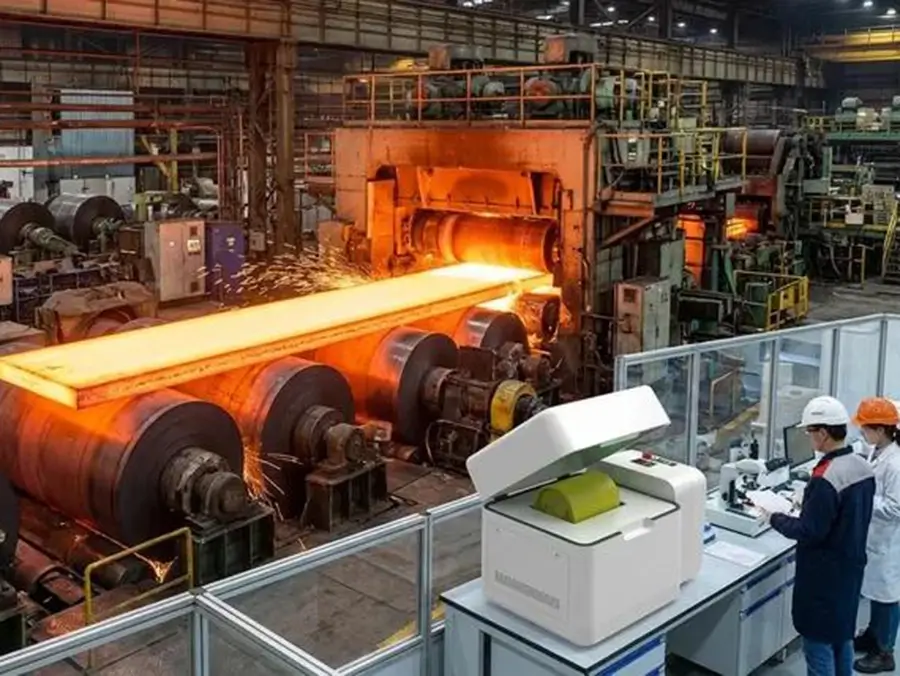
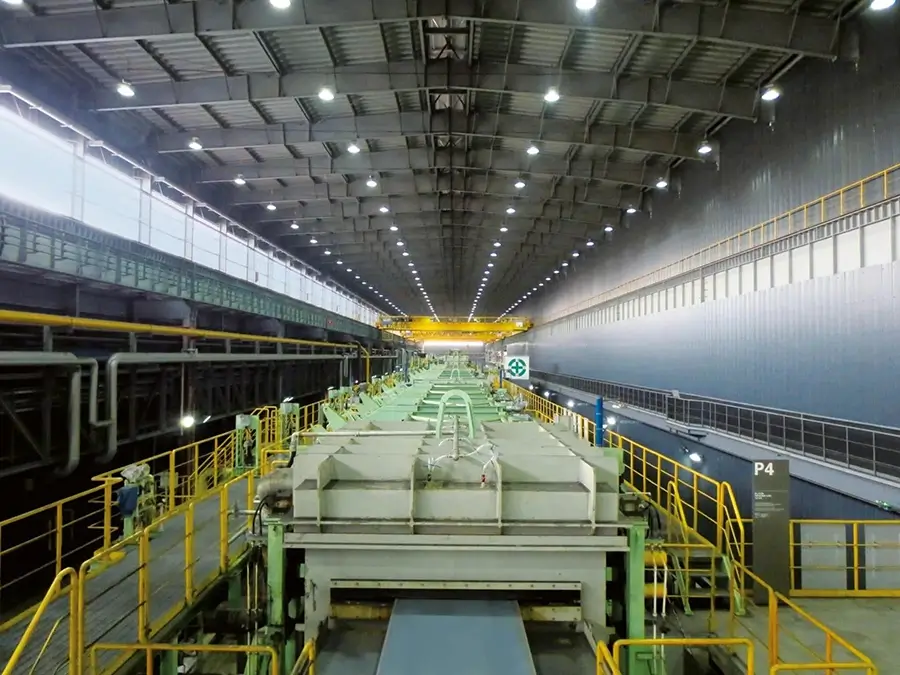
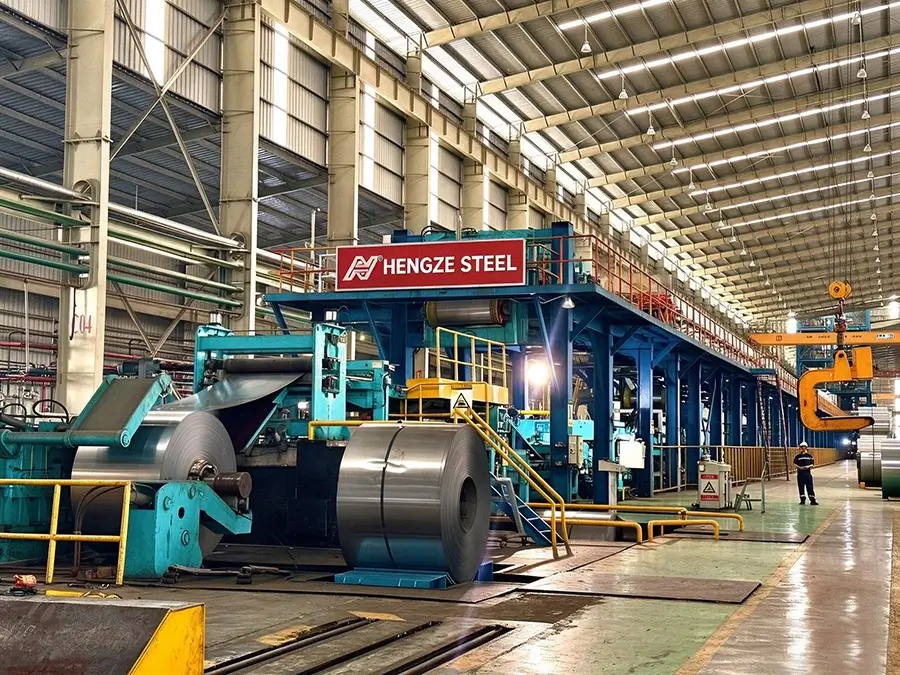
The production sequence varies by product. Hot-rolled coil does not require cold rolling, and galvanized or prepainted steel may be produced by facilities that specialize in coating rather than steelmaking.
Common types of steel coil produced by manufacturers
| Steel coil type | Main characteristics | Typical applications |
|---|---|---|
| Hot-rolled steel coil (HRC) | Hot-rolled flat steel available in different grades and thicknesses | Structural fabrication, machinery, pipes, general engineering |
| Cold-rolled steel coil (CRC) | Typically smoother surface and tighter dimensional control than hot-rolled substrate | Appliances, automotive components, cabinets, precision forming |
| Galvanized steel coil (GI) | Steel substrate coated with zinc for corrosion protection | Roofing, wall cladding, ductwork, framing |
| Galvalume steel coil (GL) | Steel coated with an aluminum-zinc-based alloy | Roofing systems, building envelopes, industrial cladding |
| Prepainted galvanized steel coil (PPGI) | Zinc-coated steel with a factory-applied paint system | Roofing sheets, wall panels, appliance housings |
| Prepainted Galvalume steel coil (PPGL) | Aluminum-zinc-coated steel with a factory-applied paint system | Architectural cladding, roofing, exterior building products |
Actual performance depends on the steel grade, substrate thickness, coating designation, coating mass, paint system, and operating environment. Buyers should verify these parameters rather than relying solely on a product name.
Advantages of buying directly from a manufacturer
Direct purchasing from a manufacturer can offer several benefits when the order matches its production capabilities.
Production-level technical coordination: Buyers can discuss specifications with the organization responsible for the relevant manufacturing process.
Consistent repeat orders: Recurring demand can be planned around an agreed grade, thickness, width, and coating specification.
Material traceability: The manufacturer may provide production and inspection records linked to the supplied coil.
Customization within production capabilities: Particular dimensions, mechanical properties, and coating requirements may be accommodated, subject to equipment limitations and order quantities.
Long-term supply planning: Forecasts and purchasing agreements can help coordinate production and deliveries.
Direct purchasing does not automatically guarantee the lowest price or shortest lead time. Production schedules, minimum quantities, raw material availability, finishing requirements, and shipping arrangements all influence the final commercial outcome.
2️⃣ What Is a Steel Coil Supplier?
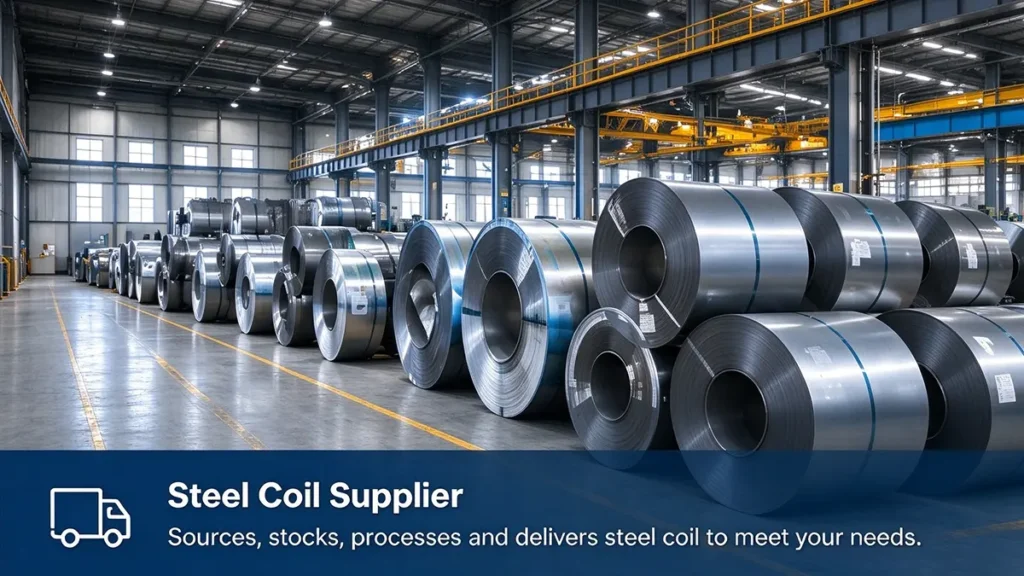
A steel coil supplier is a company that provides steel coil to buyers. Its role may include sourcing material from manufacturers, maintaining inventory, coordinating processing, arranging inspections, and organizing domestic or international deliveries.
Unlike a manufacturer, a supplier does not necessarily produce the steel it sells. However, suppliers can provide substantial value by connecting buyers with suitable production sources and coordinating the activities required to deliver material in the correct condition.
The term steel coil supplier encompasses several business models.
Types of steel coil suppliers
Steel distributors and stockholders
Distributors purchase steel coil from manufacturers or other sources and maintain inventory for resale. They may be particularly useful when customers require smaller quantities, multiple specifications, or relatively short delivery times.
For example, a metal fabrication company needing 10–20 metric tons of galvanized coil may find suitable stock through a distributor rather than arranging a new mill production order. These quantities are illustrative; actual availability depends on the supplier’s inventory and product range.
Steel trading companies and exporters
Trading companies and exporters coordinate commercial transactions between manufacturers and domestic or overseas buyers. Their services may include sourcing, quotation management, export documentation, freight coordination, and shipment tracking.
A trading company may work with one or several mills. Buyers should clarify the actual producing mill, the permitted use of alternative sources, and how material consistency will be maintained across repeat orders.
Steel service centers
Steel service centers purchase or receive steel coil and perform additional processing before delivery. Common services include:
-
Coil slitting into narrower strips.
-
Cut-to-length processing.
-
Leveling and flattening.
-
Blanking and other preparation operations.
-
Inventory storage and scheduled material release.
Integrated steel coil suppliers
Some businesses combine several functions, such as manufacturing selected products, sourcing complementary products from partner mills, holding inventory, and offering processing or export services.
This hybrid model means the distinction between a steel coil supplier and manufacturer is not always absolute. The relevant question is which operations the company performs itself and which are handled by external partners.
What value does a steel coil supplier provide?
A capable supplier may offer:
-
Access to several steel coil types through one purchasing channel.
-
Smaller order quantities from available inventory.
-
Faster dispatch when the required specification is in stock.
-
Processing services that match the buyer’s equipment.
-
Consolidated purchasing and shipment coordination.
-
Support with documentation, packaging, and export logistics.
3️⃣ Steel Coil Supplier vs Manufacturer: Key Differences
The most useful way to compare a steel coil supplier and a manufacturer is to examine their responsibilities, capabilities, and suitability for the buyer’s requirements.
| Comparison factor | Steel coil manufacturer | Steel coil supplier |
|---|---|---|
| Primary function | Produces steel coil through its own manufacturing operations | Sources and delivers steel coil to customers |
| Production equipment | Operates the relevant manufacturing equipment | May own processing equipment but does not necessarily operate a rolling mill |
| Material source | Its own production, potentially supplemented by purchased material | Own production, partner mills, distributors, or available stock |
| Minimum order quantity | Influenced by production economics and scheduling | May offer smaller quantities from existing inventory |
| Lead time | Depends on production availability, finishing, inspection, and dispatch | Depends on stock availability, sourcing, processing, and delivery |
| Customization | Controls manufacturing parameters within its technical capabilities | Coordinates sourcing and may offer downstream processing |
| Quality documentation | Can provide records for the processes and material it manufactures | Should provide the agreed documentation and maintain traceability |
| Pricing structure | Reflects manufacturing, finishing, and commercial terms | May include sourcing, inventory, processing, handling, and logistics |
| Best-fit purchasing model | Large, recurring orders or specifications requiring direct production coordination | Flexible quantities, multiple products, processing, and stock-based purchasing |
Minimum order quantity: Production requirements versus stock availability
Minimum order quantity is often a decisive factor when choosing between a manufacturer and a supplier.
A manufacturer may require a minimum production quantity because changing grades, widths, thicknesses, or coating specifications affects scheduling and production efficiency. A supplier holding suitable stock may be able to offer a smaller quantity without arranging a new production run.
There is no universal steel coil MOQ. It varies with the product, dimensions, production route, coating specification, order structure, and available inventory.
Consider two purchasing scenarios:
-
A roofing manufacturer purchases 300 metric tons of galvanized steel coil in a consistent specification for regular production. Direct sourcing may be attractive if the manufacturer’s production schedule and commercial terms fit the requirement.
-
A small fabricator purchases 15 metric tons of cold-rolled steel coil for a limited production run. A stockholding supplier may be more practical if the required specification is available.
Lead time: Available inventory versus production scheduling
Buying directly from a manufacturer does not necessarily mean faster delivery. If the required coil has not been produced, the order must wait for the relevant production and finishing stages.
A supplier may offer faster dispatch when the exact specification is available in stock. Conversely, a supplier sourcing a non-standard specification from a mill may require additional time for sourcing, production, processing, and transport.
A realistic lead-time assessment should separate four stages:
-
Material availability: Is the coil ready for dispatch, or does it require production?
-
Manufacturing and processing: Are rolling, coating, slitting, or other operations still required?
-
Inspection and dispatch: How much time is needed for quality checks, documentation, packaging, and loading?
-
Transportation: What are the expected inland transport, port handling, and international shipping times?
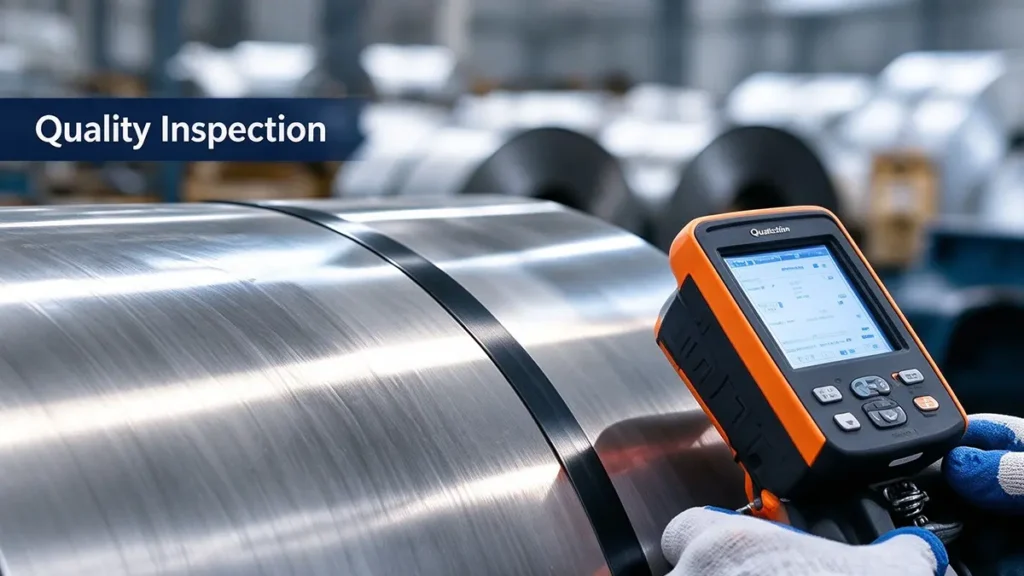
Quality control and material traceability
A manufacturer is not automatically a better source of material than a supplier. The relevant factors are the product specification, the actual producing mill, the applicable quality controls, and the traceability of the delivered coil.
For steel coil purchases, buyers may need to verify:
-
Steel grade and applicable product standard.
-
Heat number or other material identification.
-
Chemical composition.
-
Mechanical properties, including yield strength, tensile strength, and elongation where applicable.
-
Thickness, width, and other dimensional tolerances.
-
Coating designation and coating mass or thickness where relevant.
-
Surface condition and agreed acceptance criteria.
4️⃣ Which Option Is Better for Your Business?
The right choice depends on production volume, technical requirements, inventory strategy, delivery expectations, and the cost of supply interruptions.
When to choose a steel coil manufacturer
Direct manufacturer sourcing is worth evaluating when:
-
Annual demand is substantial and reasonably predictable.
-
The same grade, thickness, width, and coating are purchased repeatedly.
-
The application requires tightly controlled technical specifications.
-
Production records and traceability are important.
-
The buyer can accommodate the manufacturer’s MOQ and production schedule.
-
Long-term purchasing agreements can be coordinated with production planning.
When to choose a steel coil supplier
A supplier may be more suitable when:
-
The required quantity is below the practical mill order size.
-
Several steel coil products or dimensions are needed.
-
Material must be delivered in smaller, more frequent batches.
-
Slitting or cut-to-length processing is required.
-
Available stock can reduce lead time.
-
The buyer wants to consolidate procurement and logistics.
When a hybrid sourcing strategy makes sense
Some buyers benefit from using both models.
A manufacturer may supply the core volume for a stable, high-consumption specification, while a qualified supplier provides smaller quantities, urgent replenishment, special widths, or processed material.
This arrangement can help balance unit cost, inventory investment, and supply continuity. It may be particularly useful when demand fluctuates or when several steel coil specifications are required.
For procurement teams evaluating potential partners, Hengze Steel can be included in the sourcing assessment alongside other qualified manufacturers and suppliers. The evaluation should focus on its verified product range, actual production and sourcing arrangements, applicable quality documentation, available processing services, and ability to meet the buyer’s commercial and technical requirements.
This approach keeps the selection process objective: compare the capabilities and terms that matter to the application rather than choosing solely on the basis of a company’s title.
5️⃣ How to Evaluate a Steel Coil Supplier or Manufacturer

Once the appropriate sourcing model has been identified, the next step is to verify whether the company can deliver the required material consistently.
5.1 Verify the actual manufacturing source
Ask the company:
Does it manufacture the quoted steel coil at its own facility?
If another mill produces the material, can the producing mill be identified?
Can the material’s production origin and traceability be confirmed?
Will the same approved source be used for repeat orders?
Can the supplier notify the buyer before making any material-source substitution?
A trading company or supplier is not inherently unsuitable. The important point is to establish who is responsible for each part of the supply chain and what controls are in place to prevent unapprovedsubstitutions.
5.2 Specify the complete steel coil requirements
A request for quotation that states only “galvanized steel coil, 0.5 mm” leaves too much room for differences between offers.
Provide the information relevant to the intended application.
| Specification | What to confirm |
|---|---|
| Product type | HRC, CRC, GI, GL, PPGI, PPGL, or another specified product |
| Standard and grade | Applicable ASTM, EN, JIS, GB, or other agreed specification |
| Thickness | Nominal thickness and applicable tolerance |
| Width | Required width and width tolerance |
| Coil weight | Target weight or acceptable range per coil |
| Inner diameter | Required ID, where relevant to handling or processing |
| Coating | Coating designation and applicable inspection requirements |
| Paint system | For prepainted products: coating type, color reference, film requirements, and finish |
| Mechanical properties | Required values and applicable test methods |
| Surface requirements | Oiling, passivation or other treatment, appearance, and acceptable defects |
| Packaging | Coil orientation, wrapping, edge protection, and labeling |
| Documentation | Required inspection certificates, test reports, and traceability records |
Not every parameter applies to every product. For galvanized steel, buyers should specify the relevant coating designation and product standard. For prepainted steel, the paint system, color, film requirements, and performance expectations may also be essential.
The application determines which parameters deserve the most attention. Roofing products may require specific corrosion protection, formability, and paint-system performance, while stamping applications may place greater emphasis on mechanical properties, dimensional consistency, and surface quality.
5.3 Review quality documents before placing the order
Agree on the documentation package during the quotation and contract stages.
Depending on the product and application, the buyer may request:
-
Technical data sheet or product specification.
-
Mill test certificate or material inspection certificate.
-
Chemical composition and mechanical test results.
-
Coating inspection records.
-
Relevant quality-management certifications.
-
Packing list and coil identification schedule.
-
Certificate of origin or other required export documents.
5.4 Compare total delivered cost
The lowest quoted price per metric ton does not necessarily represent the lowest overall procurement cost.
A practical comparison is:
Total delivered cost = Material cost + Processing + Packaging and handling + Freight and insurance + Applicable duties and other charges.
Depending on the purchase, buyers should also consider inspection fees, storage, financing, expected processing yield, and the cost of delays or quality problems.
For example, consider two hypothetical quotations for a 100-metric-ton order:
| Cost component | Offer A | Offer B |
|---|---|---|
| Material price per metric ton | $620 | $635 |
| Material cost for 100 metric tons | $62,000 | $63,500 |
| Additional costs | To be confirmed | To be confirmed |
Offer A has a $1,500 lower material cost before other charges. However, the comparison is valid only if both offers meet the same technical specification and contractual requirements.
Differences in coating, tolerances, processing, freight, documentation, delivery conditions, or material yield may affect the final result. Buyers should standardize the specification before comparing prices.
5.5 Check processing capabilities and tolerances
If a supplier offers slitting, leveling, or cut-to-length services, confirm whether the operations are performed in-house or outsourced.
For material feeding an automated production line, ask about the applicable processing tolerances and inspection procedures.
For slitting, relevant requirements may include slit width, width tolerance, edge condition, burr limits, winding quality, and master-coil dimensions. For cut-to-length material, buyers may need to specify length tolerance, flatness, and sheet dimensions.
The supplier’s equipment capabilities should be verified against the actual order. Processing limits are not universal across all steel service centers.
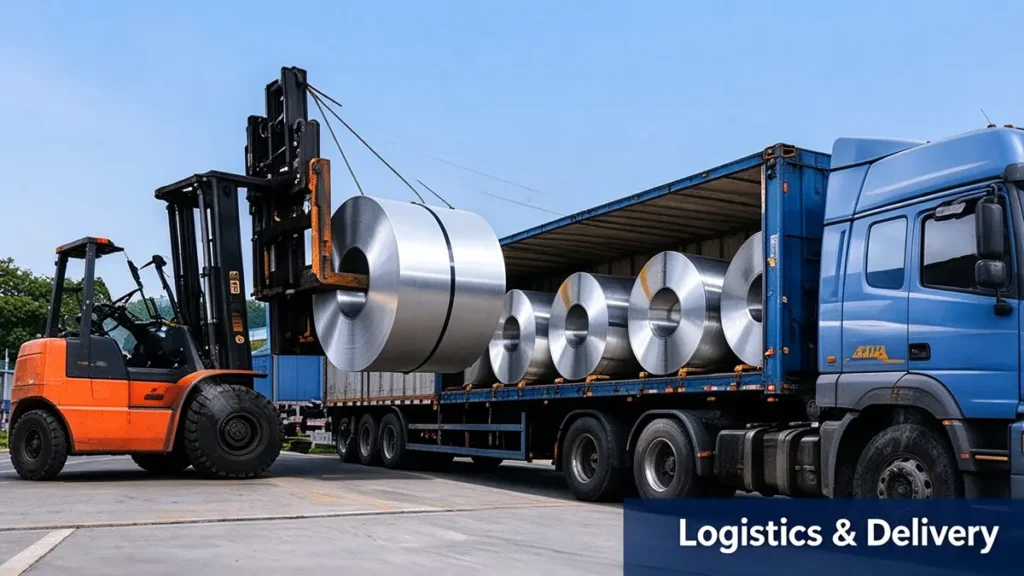
5.6 Verify export logistics and delivery terms
For international purchases, logistics and contractual responsibilities should be confirmed before the order is released.
Check the following:
-
Loading port and destination port.
-
Applicable Incoterms® rule and named place or port.
-
Whether freight and insurance are included.
-
Coil weight and loading requirements.
-
Export packaging and moisture protection.
-
Production schedule and expected transit time.
-
Responsibility for customs clearance, duties, and destination charges.
-
Procedure for documenting transport damage or nonconforming material.
6️⃣ Common Steel Coil Purchasing Mistakes
Even experienced procurement teams can encounter problems when comparing suppliers and manufacturers.
Mistake 1: Assuming every manufacturer produces the entire product.
Some companies specialize in coating or downstream processing and purchase their substrate from another mill. Verify which manufacturing stages the company actually controls.
Mistake 2: Assuming suppliers cannot provide traceable, high-quality material.
The relevant questions concern the producing mill, approved specification, inspection documentation, and the supplier’s traceability and quality-control arrangements.
Mistake 3: Comparing quotations with different technical specifications.
Coating designations, steel grades, tolerances, and surface requirements can differ. A lower price is meaningful only after the offers have been checked for technical equivalence.
Mistake 4: Confusing production lead time with delivery time.
Production, coating, inspection, packaging, inland transportation, port handling, and ocean freight may all affect the arrival date. Clarify exactly what the quoted lead time covers.
Mistake 5: Ignoring inventory and working-capital costs.
A mill-direct purchase may lower the unit price while increasing storage needs, inventory holding costs, and cash tied up in material. Assess the order against actual consumption and replenishment requirements.
Mistake 6: Leaving quality-claim procedures undefined.
The contract should identify inspection criteria, acceptable tolerances, notification deadlines, evidence requirements, and the process for resolving nonconforming material.
Mistake 7: Relying on general company claims instead of verifiable capabilities.
Descriptions such as “factory direct,” “premium quality,” or “competitive pricing” do not replace evidence. Confirm the product specification, manufacturing source, relevant documentation, processing capacity, and delivery commitments.
Frequently Asked Questions
No. A manufacturer produces steel coil through manufacturing operations, whereas a supplier sources and delivers steel coil to buyers. Some companies perform both functions. Buyers should verify the actual production source and the operations performed by the company.
Not always. Direct sourcing may be commercially attractive for large, recurring orders, but production minimums, lead times, and inventory requirements can offset the benefits. A supplier may offer smaller quantities, stock availability, or processing services that reduce total procurement costs.
The correct comparison is the total delivered cost of technically equivalent material.
Yes, provided the supplier can obtain the required documentation for the material it sells. The buyer should specify the certificate type and verify that the document corresponds to the supplied material and its identification details.
The supplier should also distinguish clearly between material it manufactures itself and material produced by another mill.
Review its manufacturing address, production equipment, product range, process capabilities, and quality-control arrangements. Ask which stages are performed in-house and request relevant supporting evidence.
A company website or quality-management certificate alone does not establish that the company manufactures the specific product being quoted.
Provide the product type, standard and grade, thickness, width, coating requirements, coil weight, order quantity, destination, delivery schedule, and documentation requirements.
Also confirm whether the material must come from a particular mill and whether processing or special packaging is required. A complete request for quotation makes offers easier to compare.
A distributor primarily sources and resells steel, often from inventory. A service center performs additional operations such as slitting, leveling, or cut-to-length processing. Some companies combine both functions.
Buyers should verify the services, equipment, and tolerances available for their particular order.
No.
PPGI uses a galvanized steel substrate with a zinc coating.
PPGL uses a Galvalume or aluminum-zinc-coated steel substrate.
Both can use paint systems such as PE, SMP, HDP and PVDF.
Conclusion
The difference between a steel coil supplier and a manufacturer comes down to their role in the supply chain, the operations they control, and the value they provide to the buyer.
A manufacturer may be the right choice for large, recurring orders that require direct coordination with production. A supplier may be better suited to flexible quantities, multiple product specifications, available stock, processing services, and coordinated logistics. In some cases, a hybrid sourcing strategy offers the best balance of cost, flexibility, and supply continuity.
Before making a decision, buyers should confirm the actual manufacturing source, establish a complete technical specification, review material traceability and inspection documents, and compare total delivered costs rather than focusing exclusively on the quoted price.
Hengze Steel is one option buyers can evaluate when comparing steel coil sourcing partners. As with any potential supplier, the appropriate assessment should be based on verified product capabilities, specification compliance, documentation, delivery arrangements, and the requirements of the intended application.
Ultimately, the right steel coil sourcing partner is the one that consistently supplies the specified material, meets agreed delivery commitments, and provides a commercially sustainable solution for your production needs.
Trending News
What to Expect When You Contact Us
Fast Response – Replies within 12 hours
Tailored Solutions – Based on your needs and industry
Full Support – From products to technical and market guidance