
Explore Trends, Innovations, and Achievements at HengZe Steel
What Is Tinplate Coil? ETP and SPTE Explained
- Industry News
- October 23, 2026
- 5:58 am
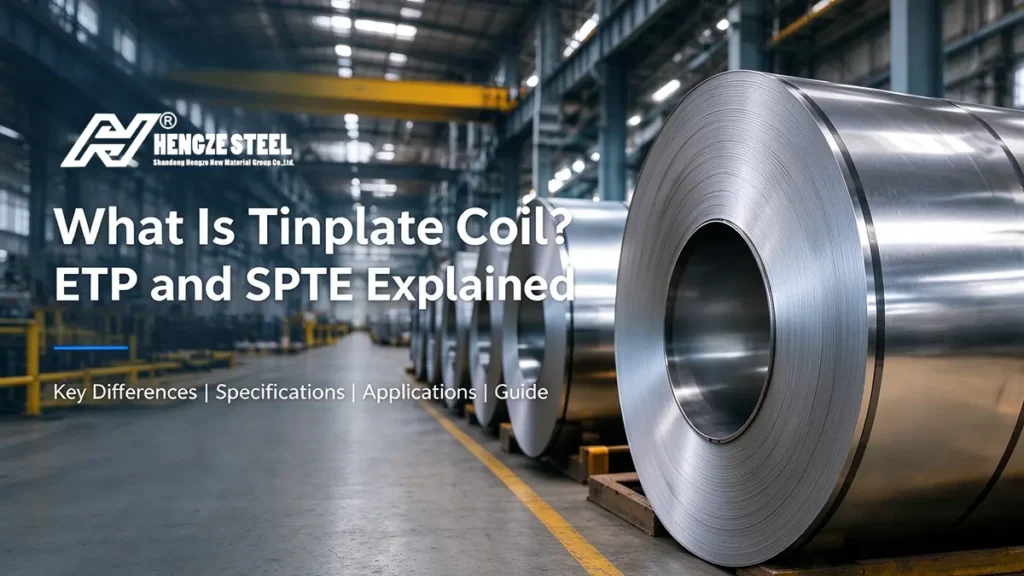
Tinplate coil is cold-reduced, low-carbon steel strip coated with a thin layer of tin, typically through an electrolytic process. It combines the strength and formability of steel with the surface properties of tin, making it widely used in food cans, beverage packaging, paint tins, metal closures, aerosol containers, and other formed metal products.
In the steel industry, ETP stands for Electrolytic Tinplate, while SPTE is a commercial designation commonly used for electrolytically tin-coated steel. Both terms generally describe the same product category, although the precise material requirements depend on the applicable standard and purchase specification.
For buyers, the difference between a suitable and unsuitable tinplate coil often comes down to more than the product name. Steel thickness, temper, tin coating mass, surface finish, passivation, oiling, and forming requirements all affect manufacturing performance.
This guide explains what tinplate coil is, how ETP and SPTE are classified, which technical specifications matter, and how to select tinplate for different packaging and industrial applications. For buyers comparing steel products and supply options, Hengze Steel provides an industrial steel sourcing reference point; the availability and specification of tinplate should be confirmed directly against the required product grade and order conditions.
Table of Contents
-
1️⃣ What Is Tinplate Coil?1️⃣ What Is Tinplate Coil?
-
2️⃣ What Do ETP and SPTE Mean?2️⃣ What Do ETP and SPTE Mean?
-
3️⃣ How Is Tinplate Coil Manufactured?3️⃣ How Is Tinplate Coil Manufactured?
-
4️⃣ Key Technical Specifications of Tinplate Coil4️⃣ Key Technical Specifications of Tinplate Coil
-
5️⃣ Common Applications of ETP and SPTE Steel5️⃣ Common Applications of ETP and SPTE Steel
-
6️⃣ Tinplate Coil vs. Galvanized Steel vs. Tin-Free Steel (TFS)6️⃣ Tinplate Coil vs. Galvanized Steel vs. Tin-Free Steel (TFS)
-
7️⃣ How to Choose the Right Tinplate Coil7️⃣ How to Choose the Right Tinplate Coil
-
8️⃣ Common Tinplate Coil Quality Issues8️⃣ Common Tinplate Coil Quality Issues
-
Frequently Asked QuestionsFrequently Asked Questions
-
ConclusionConclusion
1️⃣ What Is Tinplate Coil?
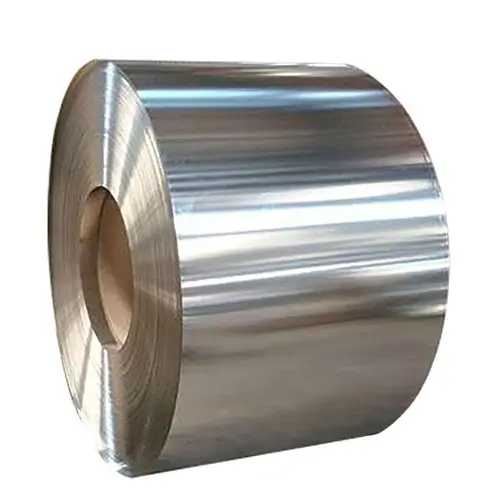
Tinplate coil is a flat steel product manufactured by coating a thin, cold-reduced steel substrate with metallic tin. The coating is generally applied by continuous electrolytic tinning, which allows the manufacturer to control the tin deposition on each surface.
The steel substrate provides mechanical strength, stiffness, and formability. The tin coating contributes corrosion protection and a suitable surface for further processing, including printing, lacquering, stamping, and forming.
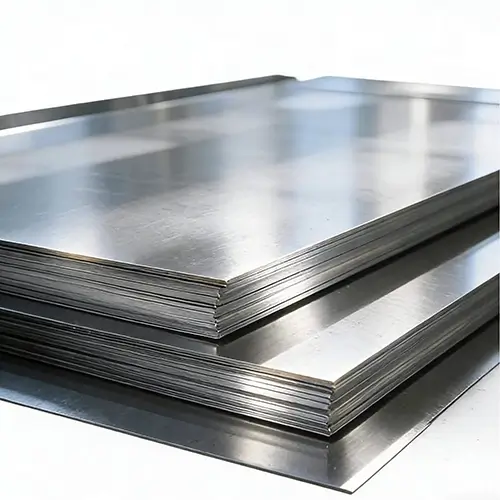
Tinplate is supplied in coils for continuous processing or cut into sheets for downstream manufacturing. Coil supply is particularly useful for high-volume production lines that require consistent material dimensions and surface quality.
Main characteristics of tinplate coil
-
Corrosion resistance: The tin coating helps protect the steel substrate, although performance depends on coating condition, exposure, and the packed product.
-
Formability: The steel can be stamped, bent, drawn, or formed when the appropriate grade, temper, and thickness are selected.
-
Surface quality: The metallic surface can support printing, decorative finishing, and protective organic coatings.
-
Solderability: Suitable tinplate specifications can support soldering where this joining method is required.
-
Recyclability: Tinplate is steel-based material that can be recovered through established steel recycling systems.
Tinplate is not completely corrosion-proof. The tin layer may be damaged during forming, and certain products can attack the coating or exposed steel. Food cans and chemical containers may therefore require an internal lacquer or polymer coating selected for the specific contents and storage conditions.
2️⃣ What Do ETP and SPTE Mean?
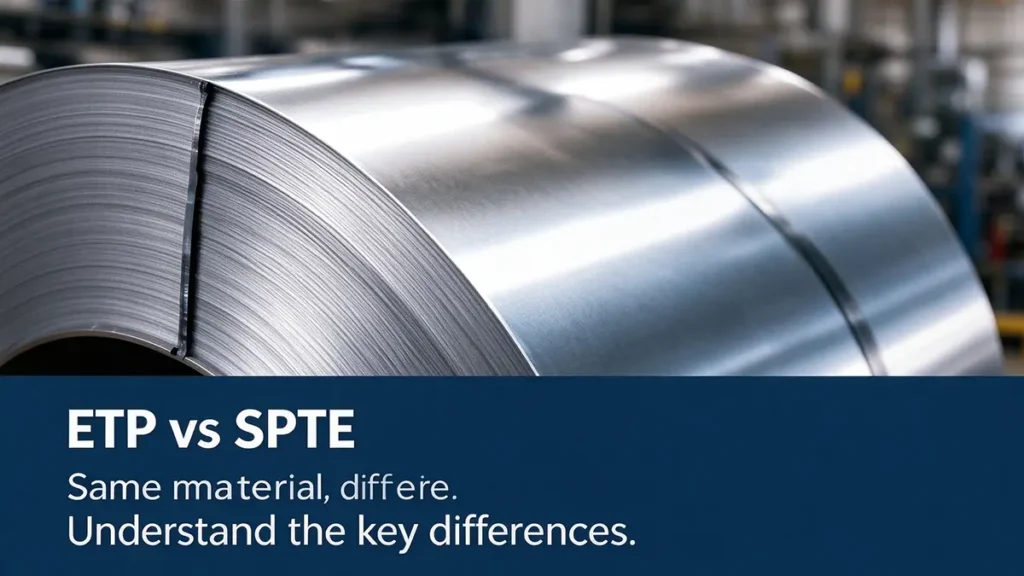
ETP and SPTE are closely related terms used in tinplate specifications, commercial quotations, and international steel trading.
-
 ETP: Electrolytic Tinplate ETP is the established abbreviation for Electrolytic Tinplate. It describes cold-reduced steel coated with tin through an electrolytic deposition process. ETP specifications commonly identify the steel grade, temper, thickness, tin coating mass, surface finish, and other requirements relevant to the finished product.
-
SPTE: Steel Plate Tin Electrolytic SPTE is a designation frequently used in commercial descriptions and export transactions for electrolytically tin-coated steel. In normal trading practice, SPTE and ETP generally refer to the same product category. However, the abbreviation alone does not define every technical property or establish compliance with a particular standard.
ETP vs. SPTE: Key differences
|
Parameter |
ETP |
SPTE |
|---|---|---|
|
Full term |
Electrolytic Tinplate |
Steel Plate Tin Electrolytic |
|
Base material |
Cold-reduced steel |
Cold-reduced steel |
|
Coating |
Metallic tin |
Metallic tin |
|
Typical production process |
Electrolytic tinning |
Generally electrolytic tinning |
|
Common applications |
Food cans, closures, metal packaging |
The same general application categories |
|
Technical requirements |
Defined by the specified standard and grade |
Must also be confirmed through the applicable specification |
The principal distinction is terminology rather than a fundamental difference in material composition. A buyer should not assume that every product described as SPTE has identical properties to every ETP grade.
For accurate purchasing, specify the applicable standard, steel grade, temper, nominal thickness, coating mass, surface condition, and intended application.
Relevant standards include ISO 11949 for cold-reduced electrolytic tinplate and the applicable ASTM tin mill product specifications. ASTM A623/A623M covers general requirements for tin mill products, while ASTM A624/A624M and A626/A626M address single-reduced and double-reduced electrolytic tinplate, respectively.
3️⃣ How Is Tinplate Coil Manufactured?
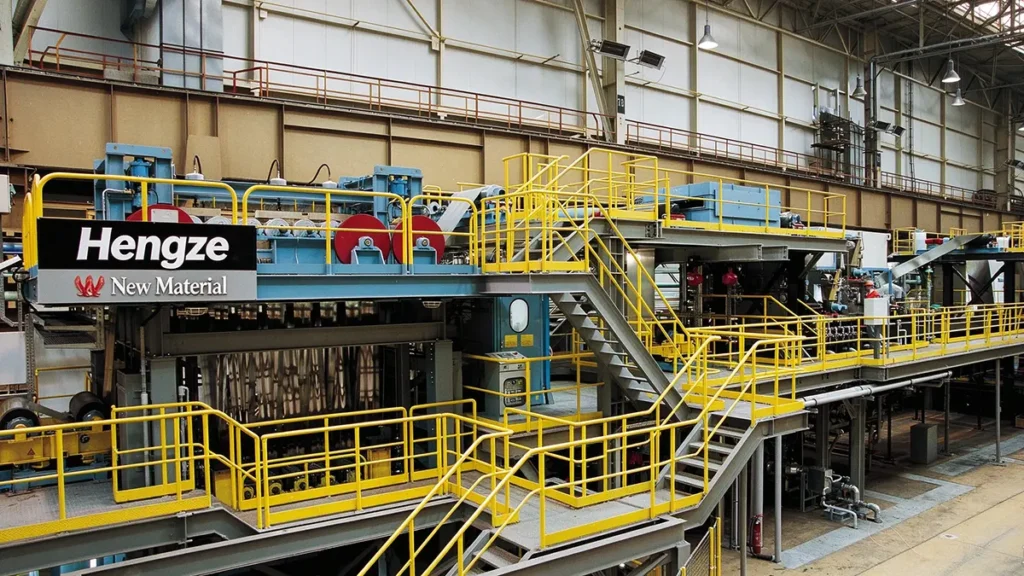
The manufacturing process determines the steel’s mechanical properties, coating uniformity, surface condition, and suitability for subsequent forming operations.
Step 1: Prepare the steel substrate
Production begins with low-carbon steel suitable for tin mill processing. The substrate is cold-reduced to the required thickness and processed to achieve the specified mechanical properties.
Thickness consistency, surface cleanliness, and substrate quality are important because defects in the steel can affect the appearance and performance of the finished tinplate.
Step 2: Clean and electrolytically coat the strip
The steel strip passes through cleaning stages to remove oil, dirt, and other contaminants.
It then enters an electrolytic tinning line, where an electrical current deposits metallic tin onto the steel surface. The process can produce equal coating masses on both sides or different coating masses on the two sides, depending on the required specification.
Step 3: Apply tin reflow and surface treatment where specified
Depending on the production route, the deposited tin may undergo a reflow process to develop a bright surface and a characteristic tin/iron-alloy interface.
A suitable passivation treatment may then be applied to control surface oxidation and support downstream processing. The treatment must be compatible with the customer’s requirements for printing, lacquering, welding, and end use.
Step 4: Apply oil and inspect the finished coil
A controlled oil film may be applied to reduce friction during handling and forming and to help protect the surface during storage.
The finished material is checked against the purchase specification. Inspections may include thickness, width, coating mass, mechanical properties, surface condition, and coil geometry.
The key point is that tinplate quality depends on the complete production and finishing process. Two coils with the same nominal thickness can behave differently during stamping or can-making if their temper, surface treatment, or coating characteristics differ.
4️⃣ Key Technical Specifications of Tinplate Coil
When sourcing tinplate coil, buyers should evaluate the complete specification rather than selecting material based on thickness or coating mass alone.
4.1 Thickness and width
Tinplate is produced in thin gauges to balance material consumption, strength, stiffness, and forming performance.
ISO 11949:2026 specifies requirements for single- and double-cold-reduced electrolytic tinplate supplied in coils and sheets. Its general nominal thickness ranges are:
|
Product type |
Nominal thickness range |
|---|---|
|
Single-cold-reduced tinplate |
0.150–0.600 mm |
|
Double-cold-reduced tinplate |
0.100–0.390 mm |
These ranges describe the standard’s coverage, not a guarantee of availability in every dimension. Actual supply depends on the manufacturer’s capabilities, grade, width, and order requirements.
Width and tolerance should be selected according to the customer’s slitting, blanking, stamping, or can-making equipment. Coil inside diameter, outside diameter, and maximum coil weight may also need to be specified.
4.2 Single-reduced vs. double-reduced tinplate
Single-reduced (SR) and double-reduced (DR) tinplate differ in their rolling routes and the mechanical properties achieved.
|
Parameter |
Single-reduced (SR) |
Double-reduced (DR) |
|---|---|---|
|
Rolling route |
Final gauge achieved through a principal cold-reduction stage |
Additional cold reduction after annealing |
|
Typical thickness |
Generally thicker |
Generally thinner |
|
Mechanical properties |
Available in different strength and formability grades |
Typically higher strength at a given thickness |
|
Common selection objective |
Formability and structural requirements |
Lightweight design and strength-to-weight efficiency |
Double-reduced tinplate is often used when manufacturers need to reduce material thickness without sacrificing the required strength. However, higher strength does not automatically mean better formability.
The appropriate choice depends on the component’s geometry, drawing depth, forming pressure, seaming requirements, and risk of cracking or springback.
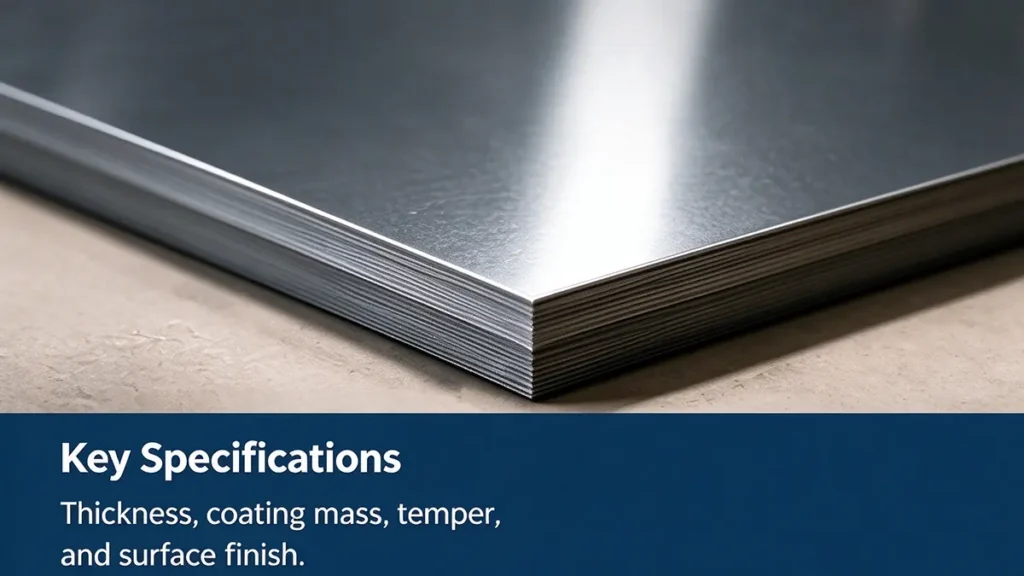
4.3 Temper grade and mechanical properties
Temper identifies the mechanical condition of tinplate and is important for controlling forming performance and finished-component strength.
Conventional tinplate specifications may use temper designations such as T-1 through T-5, while double-reduced products may use separate DR classifications. The exact designation and mechanical limits depend on the governing standard.
Typical selection considerations include:
-
Deep-drawn components: Require sufficient ductility and a suitable balance of strength and elongation.
-
Can bodies: Require consistent properties for forming, welding where applicable, and seam formation.
-
Can ends and closures: May require greater strength and stiffness to resist deformation.
-
Thin-gauge packaging: Requires careful control of mechanical properties because small variations can affect production stability.
Temper designations should not be compared across different standards without checking the corresponding mechanical requirements and test methods. ASTM also cautions that a hardness-based temper designation does not capture every factor affecting fabrication performance.
4.4 Tin coating mass
Tin coating mass is one of the most important tinplate purchasing parameters. It is typically expressed in grams per square metre (g/m²) for each coated surface.
The required coating depends on the packed product, exposure conditions, protective lacquer system, and forming process.
Illustrative coating mass combinations include:
|
Coating mass per side |
Total nominal tin mass on both sides |
General description |
|---|---|---|
|
1.0 / 1.0 g/m² |
2.0 g/m² |
Light, equal coating |
|
1.4 / 1.4 g/m² |
2.8 g/m² |
Light, equal coating |
|
2.8 / 2.8 g/m² |
5.6 g/m² |
Equal coating |
|
2.8 / 5.6 g/m² |
8.4 g/m² |
Differential coating |
These are illustrative coating combinations, not a universal list of grades or recommendations for particular products. The applicable standard determines the recognized coating designations and acceptance requirements.
For example, a nominal coating designation of 2.8/2.8 g/m² indicates 2.8 g/m² on each side, while 2.8/5.6 g/m² indicates different nominal coating masses on the two surfaces.
Differential tin coating can be useful when the two surfaces have different functional requirements. However, the intended product-contact side and coating designation convention must be clearly confirmed in the purchase specification.
A heavier tin coating does not automatically provide the best value. The coating must be appropriate for the actual corrosion conditions, product chemistry, lacquer system, and forming process.
4.5 Surface finish, passivation, and oiling
Tinplate may be supplied with different surface finishes, including bright and stone finishes, depending on the required appearance and downstream application.
Buyers should also confirm:
-
Surface finish and appearance requirements.
-
Passivation treatment and relevant process restrictions.
-
Oiling type and quantity.
-
Compatibility with printing inks, adhesives, and organic lacquers.
-
Acceptable limits for scratches, stains, dents, and other surface defects.
These parameters are particularly important for packaging manufacturers that print directly onto the steel or apply internal protective coatings before forming.

5️⃣ Common Applications of ETP and SPTE Steel
Tinplate coil is widely used in metal packaging because it combines a formable steel substrate with a metallic coating suitable for many packaging systems.
-
5.1 Food cans Tinplate is widely used for canned vegetables, fruit, fish, meat, sauces, and other processed foods. The steel provides structural strength, while the tin coating and suitable internal lacquer system help control corrosion and product interaction.
-
5.2 Beverage packaging Tinplate can be used in selected beverage packaging formats and components. Material selection depends on the container design, forming method, internal coating, and beverage chemistry.
-
5.3 Paint and chemical containers Tinplate is used for paint tins, lubricant containers, and certain chemical packaging products. Compatibility with the contents is essential because some solvents, acidic formulations, or reactive chemicals can attack the metal or its protective coating.
-
5.4 Aerosol cans and closures Tinplate can be used for aerosol bodies, lids, caps, and other packaging components, subject to pressure-vessel design, coating compatibility, and the manufacturer's processing requirements.
-
5.5 Caps, closures, and stamped components Thin tinplate can be stamped into crown caps, twist-off closures, and decorative metal components. The appropriate temper and coating condition help maintain dimensional accuracy and surface quality during forming.
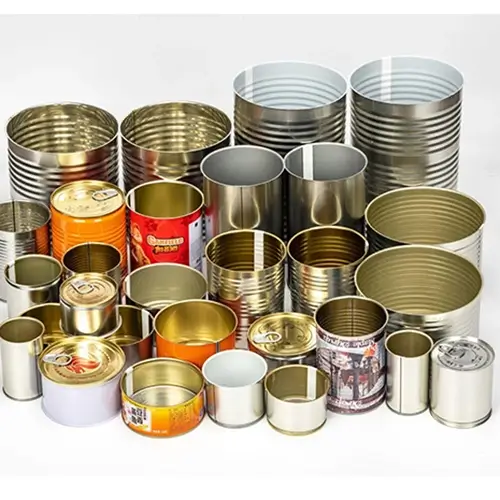
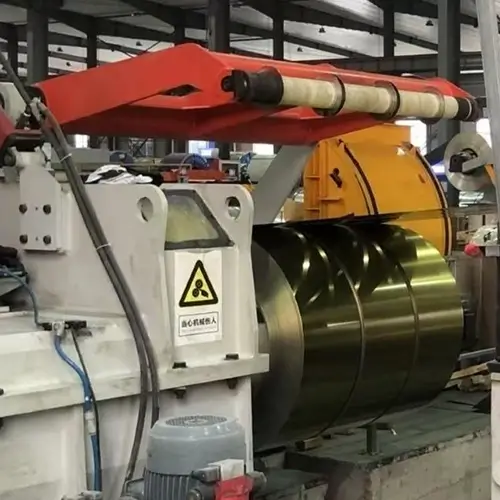
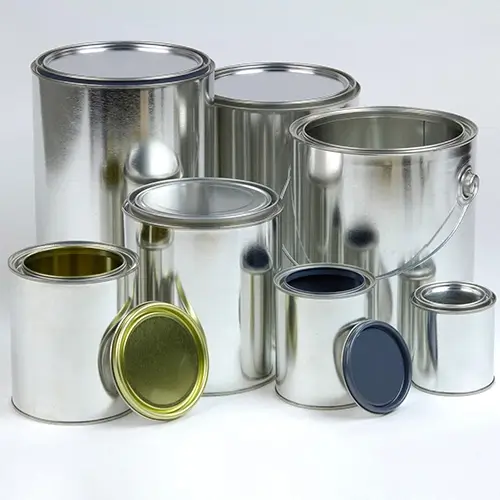
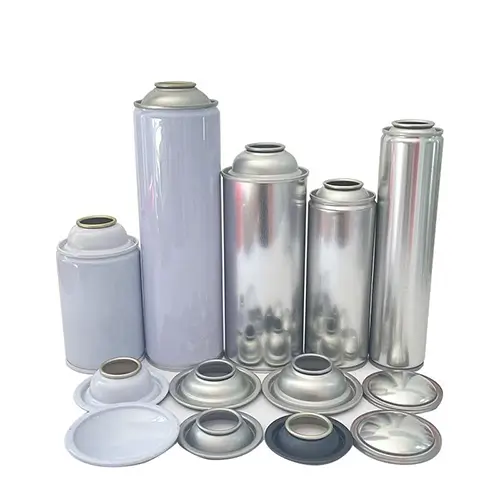
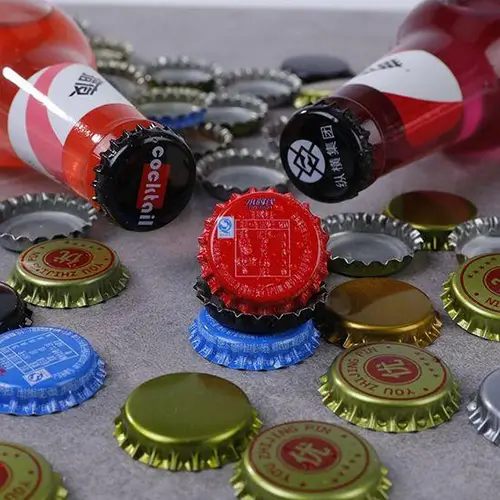
For packaging manufacturers, the main objective is to select a material that runs consistently on the production line while meeting the required service life and packaging performance.
6️⃣ Tinplate Coil vs. Galvanized Steel vs. Tin-Free Steel (TFS)
Tinplate, galvanized steel, and tin-free steel may all have metallic coatings, but they are not interchangeable products.
|
Feature |
Tinplate (ETP/SPTE) |
Galvanized steel (GI) |
Tin-free steel (TFS/ECCS) |
|---|---|---|---|
|
Base material |
Steel |
Steel |
Steel |
|
Main coating |
Tin |
Zinc |
Chromium/chromium oxide-based layer |
|
Typical application focus |
Metal packaging |
Construction, appliances, general fabrication |
Packaging ends, closures, and selected formed components |
|
Surface protection |
Tin coating, often combined with lacquer |
Zinc-based corrosion protection |
Surface treatment, usually with suitable organic coating |
|
Key selection factor |
Packaging compatibility, coating mass, formability |
Atmospheric corrosion resistance and fabrication needs |
Lacquer adhesion, surface requirements, and forming process |
TFS, also known as electrolytic chromium-coated steel (ECCS), is a separate product category. It does not contain the same metallic tin coating as ETP. It is frequently used for can ends and closures where lacquer adhesion and component design are important.
Galvanized steel is generally selected for different service environments, such as building products and outdoor fabrication. Its zinc coating is not a direct substitute for tinplate in packaging applications.
The correct material should be selected according to the final product, joining process, corrosion requirements, and applicable food-contact or chemical-packaging regulations.
7️⃣ How to Choose the Right Tinplate Coil
A reliable tinplate specification starts with the finished component, not simply the raw material price.
Step 1: Define the application
Identify what the material will become: a food can, beverage container, paint tin, aerosol component, crown cap, or another product.
For food and beverage packaging, establish the product’s acidity, salt content, sulfur content, filling temperature, sterilization process, and expected shelf life. These factors affect the required protective coating and internal lacquer.
Step 2: Confirm the forming and joining process
Deep drawing, stamping, bending, seaming, and welding impose different demands on the steel. Confirm whether the material must withstand substantial deformation, maintain tight dimensional tolerances, or support a specific joining method.
Step 3: Specify the material grade and dimensions
At minimum, confirm:
-
Applicable standard and edition.
-
Steel grade and temper.
-
Nominal thickness and tolerance.
-
Coil width and width tolerance.
-
Single-reduced or double-reduced condition.
-
Coil inside diameter, outside diameter, and maximum coil weight.
Step 4: Select the coating mass and surface condition
Specify the coating mass for each side, including whether equal or differential coating is required. Also identify the finish, passivation, oiling, and any restrictions related to downstream lacquering or printing.
Step 5: Confirm quality documents and acceptance criteria
For repeat production, agree on inspection requirements and documentation before shipment. Depending on the order, these may include a mill test certificate, dimensional inspection results, coating mass measurements, mechanical test results, and surface-quality criteria.
For food-contact applications, request the relevant material declarations and supporting compliance documentation for the intended market and complete packaging system. A tinplate designation alone does not establish regulatory compliance of the finished package.
Step 6: Evaluate processing performance, not just unit price
A lower-priced coil may create higher total costs if it produces more stamping rejects, coating defects, line stoppages, or forming inconsistencies.
For large-volume packaging production, thickness consistency, coil shape, surface quality, and stable mechanical properties can be as important as the initial purchase price.
Hengze Steel supplies steel products for industrial applications. Buyers sourcing tinplate coil should confirm the available ETP/SPTE specifications, applicable standards, and product-specific inspection documentation with the supplier before finalizing an order.
8️⃣ Common Tinplate Coil Quality Issues
Several quality issues can affect tinplate processing and finished packaging.
|
Potential issue |
Possible effect |
What to check |
|---|---|---|
|
Uneven tin coating |
Inconsistent corrosion or surface performance |
Coating mass and distribution |
|
Scratches or dents |
Poor appearance or damaged protective surface |
Handling, packaging, and surface inspection |
|
Excessive edge wave or poor flatness |
Feeding and forming difficulties |
Coil shape and flatness tolerances |
|
Incorrect temper |
Cracking, excessive springback, or deformation |
Mechanical properties and grade |
|
Rust or oxidation |
Surface defects and reduced usability |
Storage, oiling, packaging, and moisture exposure |
|
Poor lacquer compatibility |
Adhesion failure or inadequate corrosion protection |
Passivation, surface condition, and coating trials |
Not every visible surface variation makes a coil unusable. Acceptance should be based on the agreed standard, product specification, and the customer’s process requirements.
When a recurring defect appears during production, preserve the relevant coil identification, record the affected length and processing conditions, and notify the supplier. This helps distinguish a material issue from a problem caused by tooling, lubrication, storage, or downstream processing.
Frequently Asked Questions
In normal commercial usage, yes. ETP means Electrolytic Tinplate, while SPTE is a designation used for electrolytically tin-coated steel. The precise material requirements still need to be confirmed through the applicable standard and purchase specification.
Yes. Tinplate is widely used for food cans and closures. However, suitability depends on the food composition, internal lacquer system, processing conditions, and applicable food-contact requirements. The material designation alone is not sufficient to establish compliance.
ETP has a metallic tin coating, whereas TFS/ECCS uses a chromium/chromium oxide-based surface treatment. Both can be used in metal packaging, but their surface chemistry, coating compatibility, and joining characteristics differ.
It generally indicates a nominal tin coating mass of 2.8 g/m² on each surface. The combined nominal coating mass is 5.6 g/m² across both surfaces. Confirm the exact designation convention and acceptance limits under the governing standard.
No. Thicker steel increases material consumption and may not be necessary for the finished component. Likewise, a heavier tin coating is not automatically the best option. Both should be selected according to forming requirements, corrosion exposure, product compatibility, and total packaging cost.
ISO 11949 covers cold-reduced electrolytic tinplate supplied in coils and sheets. Other specifications, including ASTM A623-related standards and national standards such as GB/T 2520, may apply depending on the market and contract. The buyer and supplier should agree on the exact standard and edition.
Yes, but the paint is only one part of the corrosion-protection system. The metallic zinc coating, pretreatment, primer, topcoat, edge condition and fabrication quality all influence corrosion performance.
No.
PPGI uses a galvanized steel substrate with a zinc coating.
PPGL uses a Galvalume or aluminum-zinc-coated steel substrate.
Both can use paint systems such as PE, SMP, HDP and PVDF.
Conclusion
Tinplate coil is a specialized thin-gauge steel product that combines a steel substrate with a controlled metallic tin coating. ETP and SPTE generally refer to the same product category, but neither term specifies all the properties required for a successful application.
For manufacturers and steel buyers, the most important decisions involve thickness, temper, coating mass, surface treatment, forming requirements, and compatibility with the packed product. These parameters determine whether a coil can be processed reliably and whether the finished container will meet its performance requirements.
When sourcing tinplate coil, define the end use first, specify the complete technical requirements, and confirm inspection and compliance documentation before production. This approach provides a more dependable basis for material selection than comparing ETP or SPTE quotations by price alone.
Trending News
What to Expect When You Contact Us
Fast Response – Replies within 12 hours
Tailored Solutions – Based on your needs and industry
Full Support – From products to technical and market guidance